— Product
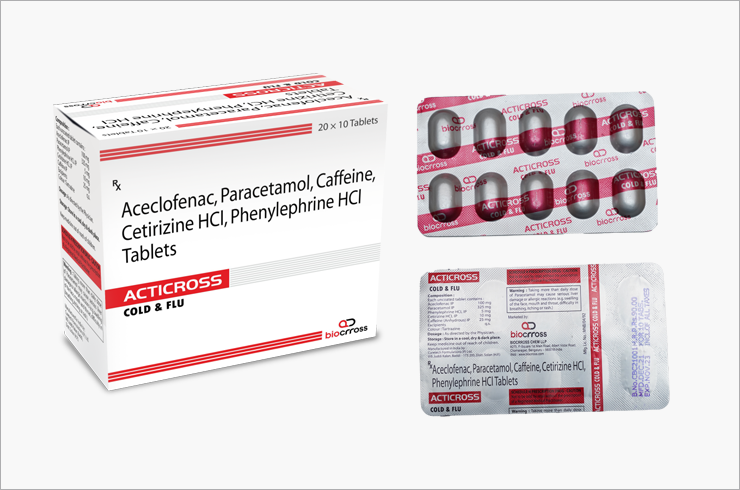
ACTICROSS-COLD FLU
ACECLOFENAC + PARACETAMOL + CAFFAINE + CETRIZINE + PHENYLEPHRINE
ACTICROSS-COLD FLU is a multi-ingredient tablet for the symptomatic relief of colds and influenza, combining aceclofenac and paracetamol for aches and fever, caffeine to counter the associated lethargy, cetirizine for the running nose and sneezing, and phenylephrine as a decongestant. It treats the symptom complex only and has no effect on the underlying viral infection.
01
Benefits
- Aceclofenac and paracetamol together address the fever, headache and body ache that dominate the first days of influenza.
- Cetirizine dries the rhinorrhoea and settles the sneezing and watery eyes without the heavy sedation of older antihistamines.
- Phenylephrine constricts the nasal mucosal vessels, relieving blockage and improving sleep and breathing.
- Caffeine offsets some of the fatigue of the illness and modestly enhances the analgesic effect.
- One tablet replaces three or four separate preparations, which improves adherence over a short course.
02
Side effects
Not everyone gets these. Most are mild and settle as the course finishes.
Common
- Drowsiness or, conversely, restlessness and difficulty sleeping
- Dry mouth, nose and throat
- Nausea or epigastric discomfort
- Palpitations or a mildly raised heart rate
Less common
- Rise in blood pressure
- Difficulty passing urine, particularly in older men
- Gastric irritation or ulceration on prolonged use
- Blurred vision or headache
Stop and get medical help if any of these occur
- Chest pain, a markedly irregular heartbeat, or severe headache
- Black or tarry stools
- Yellowing of the skin or eyes
- Swelling of the face, lips or tongue, or difficulty breathing
- Inability to pass urine
03
Precautions
- Contraindicated in uncontrolled hypertension, ischaemic heart disease, significant arrhythmia and hyperthyroidism because of the phenylephrine.
- Contraindicated in narrow-angle glaucoma and in urinary retention or significant prostatic enlargement.
- Do not give with, or within fourteen days of, a monoamine oxidase inhibitor.
- Contraindicated in active peptic ulcer, severe hepatic or renal impairment, and NSAID hypersensitivity.
- For short-term use only — reassess if symptoms persist beyond five days or fever beyond three.
- Check total daily paracetamol across all products; cold preparations are the commonest source of accidental overdose.
- May cause drowsiness. Warn the patient before driving, and avoid alcohol.
- Not recommended in pregnancy, and to be used while breastfeeding only on medical advice.