— Product
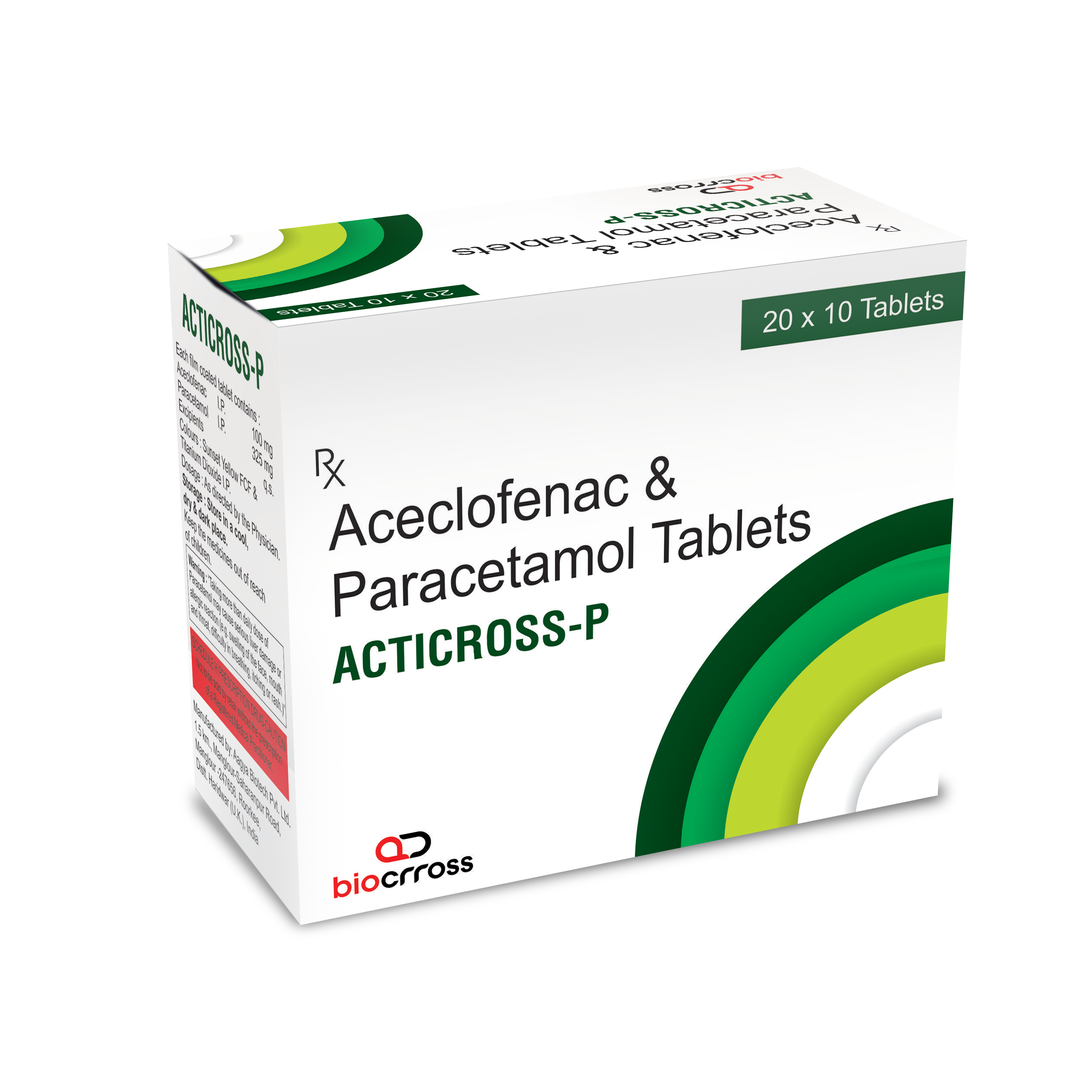
ACTICROSS-P(GREEN)
ACECLOFENAC 100MG + PARACETAMOL 325MG
ACTICROSS-P(GREEN) is a fixed-dose tablet of aceclofenac 100 mg with paracetamol 325 mg, for short-term relief of pain and inflammation. It is used in osteoarthritis and rheumatoid flares, low back and neck pain, dental pain, dysmenorrhoea, sprains and strains, and post-traumatic or post-operative pain.
01
Benefits
- Aceclofenac inhibits cyclo-oxygenase and reduces prostaglandin production, easing swelling, stiffness and inflammatory pain.
- Paracetamol acts centrally to raise the pain threshold and reduce fever, complementing the peripheral action of the NSAID.
- The combination gives useful analgesia at a lower overall NSAID burden than escalating aceclofenac alone.
- Aceclofenac is generally better tolerated in the stomach than older non-selective NSAIDs at equivalent analgesic effect.
- Onset of relief is typically within an hour of a dose, supporting same-day mobility.
- Twice-daily dosing suits both short courses and supervised longer-term use in chronic arthritis.
02
Side effects
Not everyone gets these. Most are mild and settle as the course finishes.
Common
- Nausea, indigestion or epigastric discomfort
- Abdominal pain or diarrhoea
- Dizziness or headache
- Loss of appetite
Less common
- Gastric erosion, ulceration or gastrointestinal bleeding
- Raised liver enzymes on testing
- Skin rash or itching
- Fluid retention, ankle swelling or a rise in blood pressure
Stop and get medical help if any of these occur
- Black, tarry stools or vomiting of blood
- Yellowing of the skin or eyes, or persistent right-upper-abdominal pain
- Swelling of the face, lips or tongue, or difficulty breathing
- A marked fall in urine output, or new swelling of the ankles
- Widespread rash with blistering or peeling skin
03
Precautions
- Contraindicated in active peptic ulcer disease or a history of gastrointestinal bleeding.
- Contraindicated in severe hepatic or renal impairment, and in known NSAID hypersensitivity including aspirin-sensitive asthma.
- Avoid in the third trimester of pregnancy; use in earlier pregnancy and in breastfeeding only on medical advice.
- Check the patient's total daily paracetamol intake across all products — the ceiling is easily breached when combination products are stacked.
- Avoid alcohol during the course, which raises both the gastrointestinal bleeding risk and the risk of liver injury.
- Use with care in the elderly, in cardiovascular disease, and alongside anticoagulants, corticosteroids or other NSAIDs.
- Take with or after food, and use the lowest effective dose for the shortest period that controls symptoms.