— Product
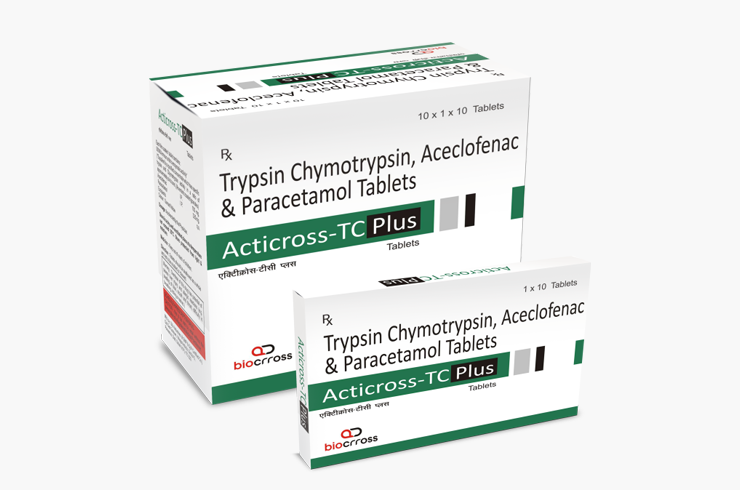
ACTICROSS TC PLUS TAB
ACECLOFENAC 100MG + PARACETAMOL + TRYPSIN CHY
ACTICROSS TC PLUS TAB combines aceclofenac 100 mg with paracetamol and the proteolytic enzyme pair trypsin-chymotrypsin. It is used for painful inflammatory conditions where swelling is a prominent feature — post-traumatic and post-surgical oedema, sprains and strains, dental and soft-tissue inflammation — bringing together anti-inflammatory, analgesic and anti-oedema actions in a single tablet.
01
Benefits
- Aceclofenac inhibits cyclo-oxygenase, cutting prostaglandin production and with it the local inflammation and pain signalling at the site of injury.
- Paracetamol acts centrally to raise the pain threshold, adding analgesia without increasing the NSAID dose.
- Trypsin-chymotrypsin breaks down inflammatory exudate and fibrin, helping resolve swelling and bruising rather than only masking the pain.
- Reducing oedema shortens the period of restricted movement after trauma or surgery.
- A single tablet covers three actions, simplifying the regimen for post-operative and post-traumatic patients.
02
Side effects
Not everyone gets these. Most are mild and settle as the course finishes.
Common
- Nausea, indigestion or epigastric discomfort
- Abdominal pain or diarrhoea
- Headache or dizziness
- Alteration in the colour and odour of stools (enzyme component)
Less common
- Gastric erosion, ulceration or gastrointestinal bleeding
- Raised liver enzymes on testing
- Skin rash, itching or flushing
- Fluid retention or a rise in blood pressure
Stop and get medical help if any of these occur
- Black, tarry stools or vomiting of blood
- Yellowing of the skin or eyes
- Swelling of the face, lips or tongue, or difficulty breathing
- A marked fall in urine output or new swelling of the ankles
- Widespread rash with blistering or peeling skin
03
Precautions
- Contraindicated in active peptic ulcer disease or a history of gastrointestinal bleeding.
- Contraindicated in severe hepatic or renal impairment, and in known NSAID hypersensitivity including aspirin-sensitive asthma.
- Avoid in patients with coagulation disorders or on anticoagulants — the enzyme component may add to bleeding risk.
- Swallow whole on an empty stomach with water; crushing or chewing destroys the enteric coating that protects the enzymes.
- Check the patient's total daily paracetamol intake across all products before adding this one.
- Avoid alcohol during the course, which raises both gastrointestinal bleeding and liver injury risk.
- Avoid in the third trimester of pregnancy; use earlier in pregnancy and while breastfeeding only on medical advice.