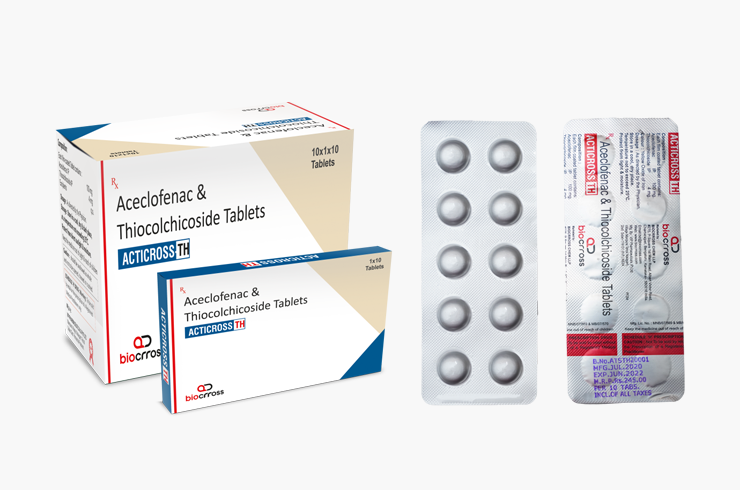
— Product
ACTICROSS-TH TAB
ACECLOFENAC 100MG + THIOCOLCHICOSIDE 4MG
ACTICROSS-TH TAB pairs aceclofenac 100 mg with thiocolchicoside 4 mg, for painful musculoskeletal conditions in which muscle spasm accompanies inflammation. It is used in acute low back pain, cervical spasm and torticollis, sprains, strains and post-traumatic musculoskeletal pain, without the paracetamol component of the fuller combination.
01
Benefits
- Aceclofenac inhibits cyclo-oxygenase and reduces the prostaglandin-driven inflammation and pain of soft-tissue injury.
- Thiocolchicoside acts centrally on GABAergic and glycinergic pathways to release the spasm that maintains the pain cycle.
- Omitting paracetamol suits patients already taking a separate paracetamol-containing preparation, avoiding duplication.
- Thiocolchicoside relieves spasm with less sedation than several older muscle relaxants.
- Relieving spasm restores range of movement and allows physiotherapy to begin earlier.
02
Side effects
Not everyone gets these. Most are mild and settle as the course finishes.
Common
- Nausea, indigestion or epigastric discomfort
- Diarrhoea
- Drowsiness or dizziness
- Headache
Less common
- Gastric erosion, ulceration or gastrointestinal bleeding
- Raised liver enzymes
- Skin rash or urticaria
- Faintness on standing
Stop and get medical help if any of these occur
- Black, tarry stools or vomiting of blood
- Yellowing of the skin or eyes
- Swelling of the face, lips or tongue, or difficulty breathing
- Seizures
- Widespread rash with blistering or peeling skin
03
Precautions
- Thiocolchicoside is restricted to short courses of no more than seven consecutive days because of genotoxicity concerns with prolonged exposure.
- Contraindicated in pregnancy, in women of childbearing potential not using reliable contraception, and in breastfeeding.
- Contraindicated in a history of seizures, as thiocolchicoside can lower the seizure threshold.
- Contraindicated in active peptic ulcer, severe hepatic or renal impairment, and NSAID hypersensitivity including aspirin-sensitive asthma.
- May cause drowsiness. Warn the patient before driving or operating machinery, and avoid alcohol.
- Take with or after food to limit gastric irritation.
- Use with care in the elderly and alongside anticoagulants, corticosteroids or other NSAIDs.