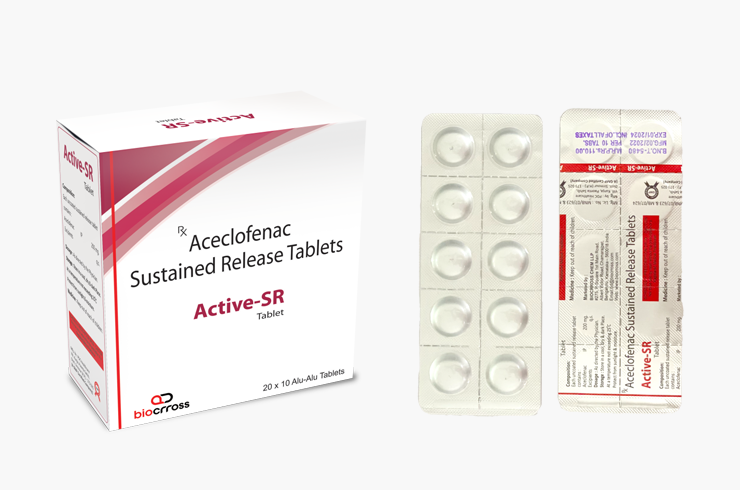
— Product
ACTIVE-SR 200MG TAB
ACECLOFENAC 200MG
ACTIVE-SR 200MG TAB is a sustained-release tablet of aceclofenac 200 mg, providing anti-inflammatory and analgesic cover across the day from a single dose. It is used in osteoarthritis, rheumatoid arthritis, ankylosing spondylitis and chronic low back pain, where steady control matters more than rapid onset.
01
Benefits
- One tablet daily gives round-the-clock cover, which improves adherence in long-term arthritis compared with twice-daily dosing.
- The sustained-release profile avoids the peaks and troughs of immediate-release dosing, giving steadier relief of morning stiffness.
- Aceclofenac reduces prostaglandin synthesis, easing joint pain, swelling and stiffness.
- Aceclofenac is generally better tolerated in the stomach than older non-selective NSAIDs at equivalent effect.
- Contains no paracetamol, so it can be combined with a separate paracetamol dose when breakthrough pain needs covering.
02
Side effects
Not everyone gets these. Most are mild and settle as the course finishes.
Common
- Nausea, indigestion or epigastric discomfort
- Abdominal pain or diarrhoea
- Dizziness or headache
- Loss of appetite
Less common
- Gastric erosion, ulceration or gastrointestinal bleeding
- Raised liver enzymes on testing
- Fluid retention, ankle swelling or a rise in blood pressure
- Skin rash or itching
Stop and get medical help if any of these occur
- Black, tarry stools or vomiting of blood
- Yellowing of the skin or eyes
- Chest pain, breathlessness or weakness down one side
- A marked fall in urine output, or new swelling of the ankles
- Widespread rash with blistering or peeling skin
03
Precautions
- Swallow whole with water. Crushing, splitting or chewing destroys the sustained-release mechanism and delivers the full 200 mg at once.
- Contraindicated in active peptic ulcer disease or a history of gastrointestinal bleeding.
- Contraindicated in severe hepatic or renal impairment, in established ischaemic heart disease, cerebrovascular disease and heart failure, and in NSAID hypersensitivity.
- Avoid in the third trimester of pregnancy; use earlier in pregnancy and while breastfeeding only on medical advice.
- Long-term use warrants periodic monitoring of blood pressure, renal function and liver enzymes.
- Avoid alcohol, and use with care alongside anticoagulants, corticosteroids or other NSAIDs.
- Take with or after food, at the lowest effective dose for the shortest period that controls symptoms.