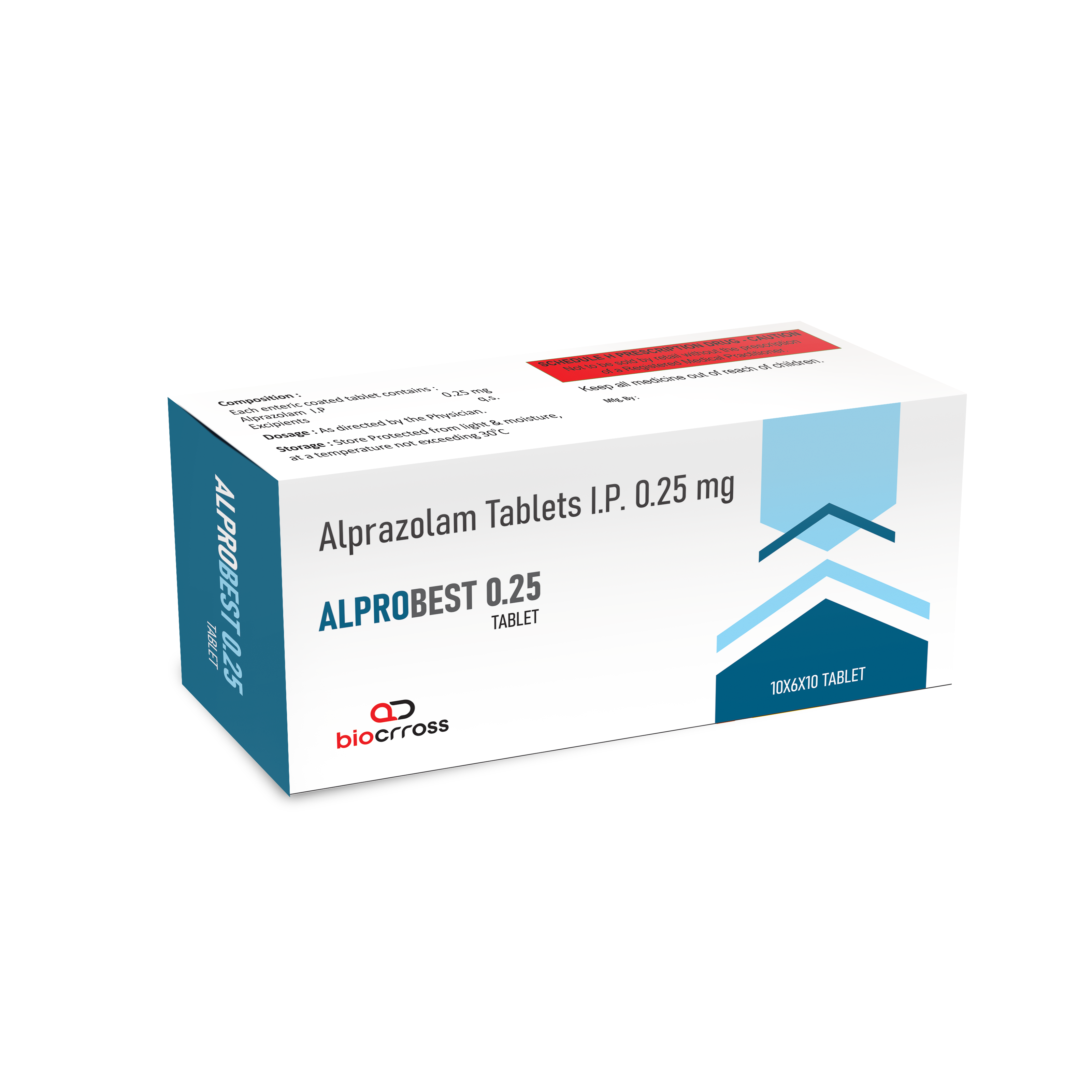
— Product
ALPROBEST 0.25 TAB
ALPRAZOLAM 0.25MG TAB
ALPROBEST 0.25 TAB is a tablet of alprazolam 0.25 mg, a short-acting benzodiazepine. It is used for the short-term management of anxiety disorders, anxiety associated with depression, and panic disorder. This is the lower of the two available strengths and is generally where treatment is started, particularly in the elderly.
01
Benefits
- Enhances GABA-A receptor activity, producing anxiolysis usually within an hour of a dose.
- The lower strength allows treatment to be started cautiously and titrated, which matters most in the elderly and in the benzodiazepine-naive.
- Effective in panic disorder, where it can reduce both the frequency and severity of attacks during the period before an antidepressant takes effect.
- Useful as short-term cover while a longer-term treatment such as an SSRI or psychological therapy is established.
- Relieves the physical symptoms of anxiety — tension, restlessness, palpitations — as well as the psychological ones.
02
Side effects
Not everyone gets these. Most are mild and settle as the course finishes.
Common
- Drowsiness and daytime sedation
- Light-headedness or unsteadiness
- Impaired concentration and memory
- Fatigue or muscle weakness
Less common
- Confusion, particularly in the elderly
- Falls and fractures in older patients
- Blurred vision or slurred speech
- Paradoxical agitation, irritability or aggression
Stop and get medical help if any of these occur
- Severe drowsiness, confusion or difficulty rousing
- Slow or shallow breathing
- New or worsening thoughts of self-harm
- Seizures, especially after stopping the drug abruptly
- Yellowing of the skin or eyes
03
Precautions
- Alprazolam carries a real risk of tolerance, dependence and withdrawal. Prescribe for the shortest period possible — generally two to four weeks including tapering — and review at every visit.
- Never stop abruptly after regular use. Withdrawal can cause rebound anxiety, insomnia, tremor and seizures; taper under supervision.
- Contraindicated in myasthenia gravis, severe respiratory insufficiency, sleep apnoea syndrome, severe hepatic impairment and narrow-angle glaucoma.
- Combining with opioids causes profound sedation and respiratory depression and can be fatal. Avoid; if unavoidable, use the lowest doses with close monitoring.
- Avoid alcohol entirely during treatment.
- Causes drowsiness and impairs reaction time. The patient must not drive or operate machinery until the effect is known.
- Contraindicated in pregnancy and breastfeeding.
- Use with particular caution in the elderly, in a history of substance misuse, and in depression, where benzodiazepines may unmask suicidal ideation.