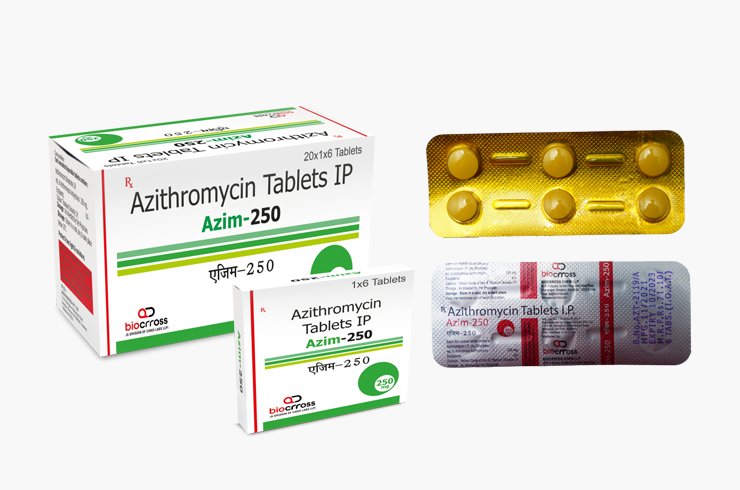
— Product
AZIM 250 TAB
AZITHROMYCIN 250MG
AZIM 250 TAB is a tablet of azithromycin 250 mg, a macrolide antibiotic. It is used for respiratory tract infections including pharyngitis, tonsillitis, sinusitis, bronchitis and community-acquired pneumonia, for skin and soft-tissue infections, and for certain sexually transmitted infections, at the strength typically used for continuation dosing.
01
Benefits
- Active against the atypical organisms — Mycoplasma, Chlamydia and Legionella — that beta-lactam antibiotics do not cover.
- Concentrates within tissues and phagocytes at levels far above those in plasma, delivering the drug to the site of infection.
- The long tissue half-life allows short three-to-five-day courses that continue working for several days after the last dose, which improves completion rates.
- Once-daily dosing is simpler than the three or four daily doses required by many alternatives.
- A useful option in patients with penicillin allergy.
02
Side effects
Not everyone gets these. Most are mild and settle as the course finishes.
Common
- Nausea, abdominal pain or cramping
- Diarrhoea or loose stools
- Vomiting
- Headache
Less common
- Altered sense of taste
- Raised liver enzymes on testing
- Skin rash or itching
- Vaginal or oral thrush following the course
Stop and get medical help if any of these occur
- Severe, watery or bloody diarrhoea, during or in the weeks after the course
- Yellowing of the skin or eyes, or dark urine
- Palpitations, fainting, or an irregular heartbeat
- Swelling of the face, lips or tongue, or difficulty breathing
- Widespread rash with blistering or peeling skin
03
Precautions
- Contraindicated in known hypersensitivity to azithromycin, erythromycin or any macrolide.
- Azithromycin prolongs the QT interval. Avoid in congenital long QT syndrome, significant bradycardia or uncorrected electrolyte disturbance, and use with care alongside other QT-prolonging drugs including antiarrhythmics, some antipsychotics and fluoroquinolones.
- Use with caution in significant hepatic impairment; stop if signs of liver dysfunction appear.
- Correct low potassium or magnesium before starting.
- Complete the full prescribed course even once symptoms settle, to limit the emergence of resistance.
- Separate dosing from aluminium- or magnesium-containing antacids by at least two hours.
- Use in pregnancy and breastfeeding only where clearly indicated.