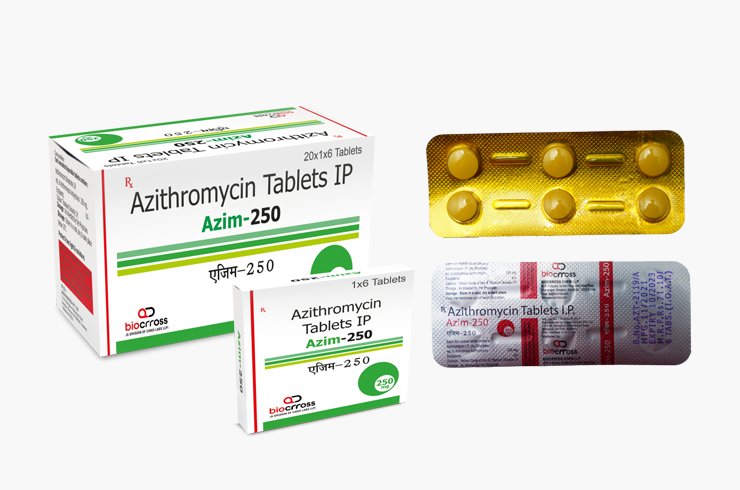
— Product
AZIM-LB TAB
AZITHROMYCIN 500MG + LACTIC ACID BACILLUS
AZIM-LB TAB combines azithromycin 500 mg with lactic acid bacillus, a probiotic included to offset the disturbance the antibiotic causes to the gut flora. It is used for the same respiratory, skin and soft-tissue infections as azithromycin alone, and suits patients who have previously had troublesome antibiotic-associated diarrhoea.
01
Benefits
- Azithromycin covers both common respiratory pathogens and the atypical organisms that beta-lactams do not reach.
- Lactic acid bacillus helps re-establish the normal gut flora that broad-spectrum antibiotics deplete.
- Reduces the incidence and severity of antibiotic-associated diarrhoea, a common reason patients abandon a course early.
- Once-daily dosing over a short course, with the tissue-persistence advantage of azithromycin.
- Particularly useful in patients with a history of gastrointestinal upset on antibiotics, and in the elderly.
02
Side effects
Not everyone gets these. Most are mild and settle as the course finishes.
Common
- Nausea or abdominal cramping
- Bloating or flatulence
- Diarrhoea or loose stools
- Headache
Less common
- Altered sense of taste
- Raised liver enzymes on testing
- Skin rash or itching
- Constipation
Stop and get medical help if any of these occur
- Severe, watery or bloody diarrhoea, during or in the weeks after the course
- Yellowing of the skin or eyes, or dark urine
- Palpitations, fainting, or an irregular heartbeat
- Swelling of the face, lips or tongue, or difficulty breathing
- Widespread rash with blistering or peeling skin
03
Precautions
- Contraindicated in known hypersensitivity to azithromycin, erythromycin or any macrolide.
- Azithromycin prolongs the QT interval. Avoid in congenital long QT syndrome, significant bradycardia or uncorrected electrolyte disturbance, and use with care with other QT-prolonging drugs.
- The probiotic component should be avoided in severely immunocompromised patients, in central venous catheter carriers, and in the critically ill, where live organisms have rarely caused systemic infection.
- Use with caution in significant hepatic impairment.
- Complete the full prescribed course even once symptoms settle.
- Separate dosing from aluminium- or magnesium-containing antacids by at least two hours.
- Use in pregnancy and breastfeeding only where clearly indicated.