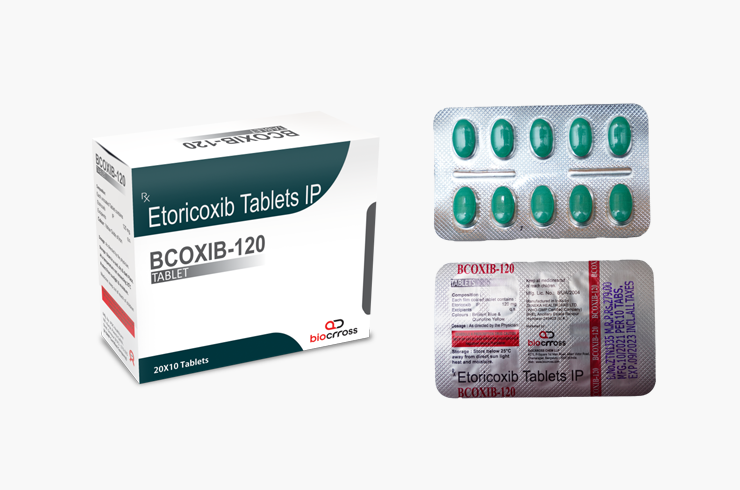
— Product
BCOXIB-120 TAB
ETORICOXIB 120MG
BCOXIB-120 TAB is a tablet of etoricoxib 120 mg, a selective COX-2 inhibitor. This is the highest strength and is reserved for the short-term treatment of acute gouty arthritis and other acute painful conditions, for a maximum of eight days rather than as continuing therapy.
01
Benefits
- The 120 mg dose provides potent anti-inflammatory action during an acute gout attack, shortening its duration.
- Selective COX-2 inhibition delivers this effect with less gastroduodenal ulceration than an equivalent non-selective NSAID.
- Once-daily dosing is convenient during the few days of an acute attack.
- Does not inhibit platelet function, an advantage in patients who also require antiplatelet therapy.
- Also used for short-term acute pain such as post-dental-surgery pain, where a strong short course is appropriate.
02
Side effects
Not everyone gets these. Most are mild and settle as the course finishes.
Common
- Dizziness or headache
- Indigestion or epigastric discomfort
- Ankle swelling or fluid retention
- Rise in blood pressure
Less common
- Palpitations
- Raised liver enzymes on testing
- Diarrhoea or nausea
- Skin rash or itching
Stop and get medical help if any of these occur
- Chest pain, breathlessness, or weakness or numbness down one side
- Black, tarry stools or vomiting of blood
- Yellowing of the skin or eyes
- Marked swelling of the legs or sudden weight gain
- Widespread rash with blistering or peeling skin
03
Precautions
- Restricted to a maximum of eight days at this strength. Cardiovascular risk is dose- and duration-dependent, and 120 mg is not a maintenance dose.
- Contraindicated in established ischaemic heart disease, cerebrovascular disease, peripheral arterial disease and moderate to severe heart failure.
- Contraindicated in uncontrolled hypertension; check blood pressure before starting and during the course.
- Contraindicated in active peptic ulceration or gastrointestinal bleeding, inflammatory bowel disease, and severe hepatic or renal impairment.
- Contraindicated in NSAID or aspirin hypersensitivity, including aspirin-sensitive asthma.
- Contraindicated in pregnancy and breastfeeding.
- Step down to a lower strength or a different agent once the acute attack has settled.