— Product
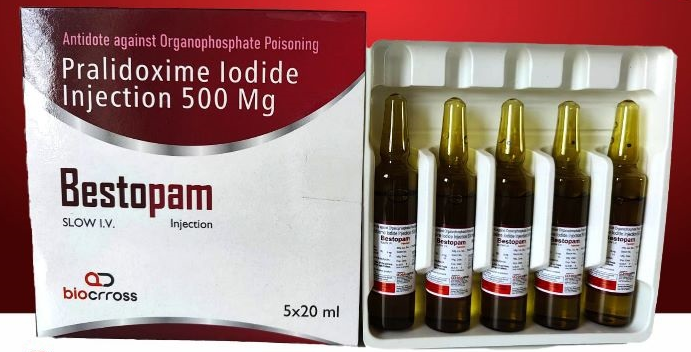
BESTOPAM 20ML INJ
PRALIDOXIME 500MG / 20ML
BESTOPAM 20ML INJ is an injection of pralidoxime 500 mg in 20 ml, a cholinesterase reactivator. It is an emergency antidote used in hospital for poisoning by organophosphorus insecticides and nerve agents, given alongside atropine, to restore the function of acetylcholinesterase that the poison has inhibited.
01
Benefits
- Reactivates acetylcholinesterase before the enzyme-poison bond ages and becomes irreversible, which atropine cannot do.
- Particularly effective against the nicotinic effects of organophosphate poisoning — muscle fasciculation, weakness and respiratory muscle paralysis — which atropine does not treat.
- Used together with atropine, the two agents cover the muscarinic and nicotinic components of the toxidrome respectively.
- Early administration can reduce the requirement for prolonged mechanical ventilation.
- The injectable presentation supports rapid administration in the emergency setting where minutes matter.
02
Side effects
Not everyone gets these. Most are mild and settle as the course finishes.
Common
- Dizziness or headache
- Blurred or double vision
- Nausea
- Pain at the injection site
Less common
- Rise in blood pressure
- Fast heart rate
- Muscle weakness or stiffness
- Drowsiness
Stop and get medical help if any of these occur
- Worsening muscle weakness or difficulty breathing
- Severe rise in blood pressure
- Marked drowsiness or loss of consciousness
- Cardiac arrhythmia
- Laryngospasm or difficulty swallowing
03
Precautions
- A hospital emergency antidote for administration by trained medical staff only, with airway support and monitoring immediately available.
- Pralidoxime does not replace atropine. Atropine must be given first and titrated to effect; pralidoxime is an adjunct.
- Effectiveness falls sharply with delay — once the enzyme-poison bond has aged, reactivation is no longer possible. Give as early as possible.
- Rapid intravenous administration can cause hypertension, tachycardia and laryngospasm; infuse slowly at the recommended rate.
- Dose reduction is required in renal impairment, as pralidoxime is renally excreted.
- Use with caution in myasthenia gravis, where it can precipitate a myasthenic crisis.
- Decontamination of the patient and protection of staff from secondary exposure are part of the same emergency response.
- Not effective in carbamate poisoning, where it may worsen the outcome — establish the poison class before giving.