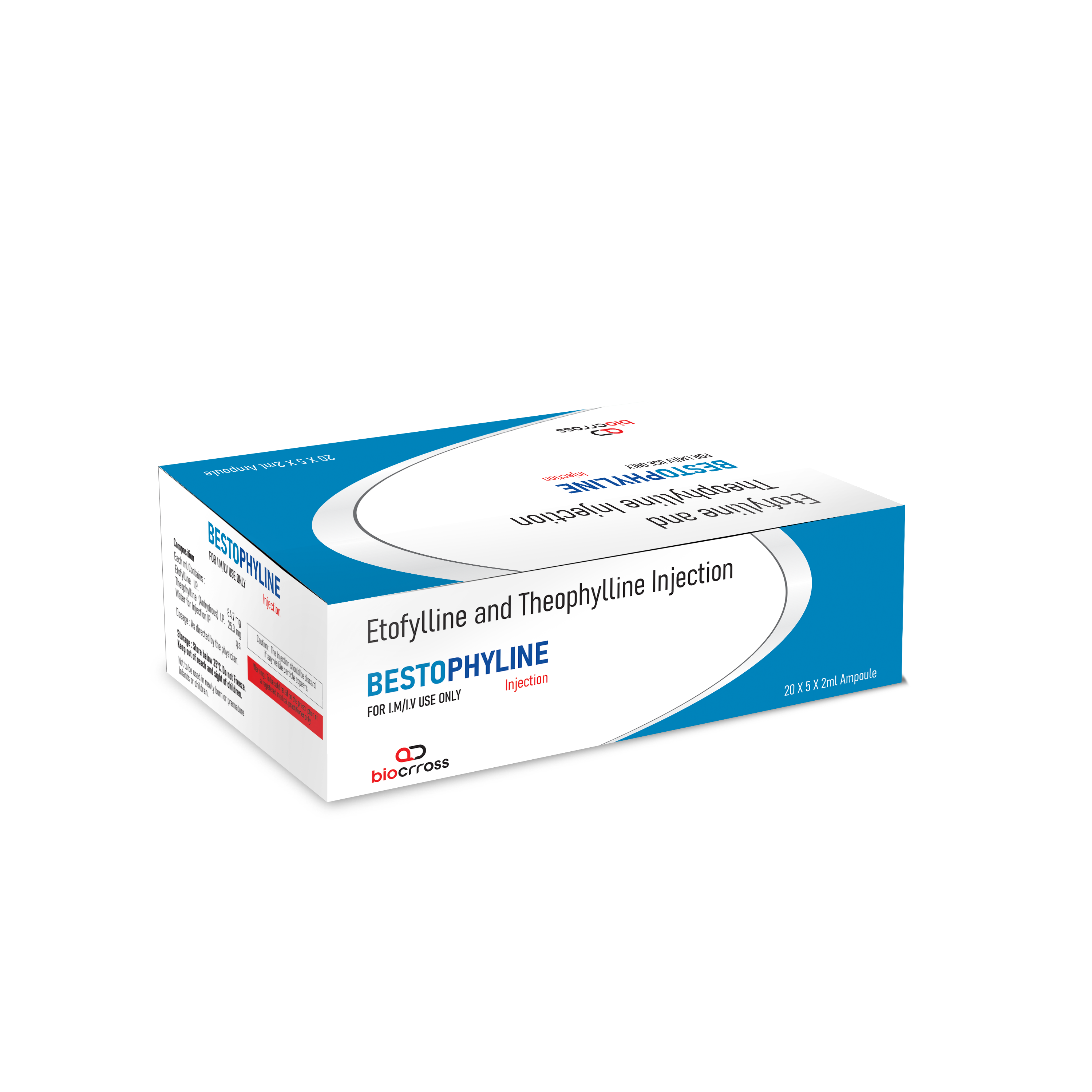
— Product
BESTOPHYLINE 2ML INJ
ETOFYL 84.7 + THEOPHY 25.3 AMP (H.E.T.) INJ
BESTOPHYLINE 2ML INJ is an injection of etofylline 84.7 mg with theophylline 25.3 mg, a xanthine bronchodilator given intramuscularly or by slow intravenous injection. It is used for acute bronchospasm in asthma and chronic obstructive pulmonary disease where inhaled therapy is insufficient or cannot be administered.
01
Benefits
- Relaxes bronchial smooth muscle through phosphodiesterase inhibition and adenosine antagonism, relieving acute bronchospasm.
- The injectable route works where a patient is too breathless to use an inhaler effectively or is not responding to nebulised therapy.
- Xanthines also improve diaphragmatic contractility, which helps in the fatigued patient with severe airflow obstruction.
- Etofylline is better tolerated in the stomach than theophylline alone, and the combination allows a lower theophylline load.
- Useful as an adjunct in acute severe asthma when first-line beta-agonist and corticosteroid treatment is insufficient.
02
Side effects
Not everyone gets these. Most are mild and settle as the course finishes.
Common
- Nausea and vomiting
- Palpitations or fast heart rate
- Headache
- Restlessness or difficulty sleeping
Less common
- Tremor
- Fall in blood pressure after rapid intravenous injection
- Low serum potassium
- Abdominal pain or reflux
Stop and get medical help if any of these occur
- Fast or markedly irregular heartbeat
- Seizures
- Persistent vomiting
- Confusion or agitation
- Chest pain
03
Precautions
- Theophylline has a narrow therapeutic index. Nausea, vomiting, palpitations, agitation and seizures are the sequence of toxicity, and seizures can occur without warning symptoms.
- Intravenous administration must be slow — rapid injection can cause arrhythmia, hypotension and sudden death.
- Do not give to a patient already taking oral theophylline or aminophylline without knowing the current level; the doses are additive.
- Clearance is reduced by heart failure, liver disease, fever, and by drugs including ciprofloxacin, erythromycin, cimetidine and allopurinol; clearance is increased by smoking and by rifampicin, phenytoin and carbamazepine.
- Use with caution in ischaemic heart disease, arrhythmia, hyperthyroidism, epilepsy and peptic ulcer disease.
- Monitor serum potassium, particularly alongside beta-agonists, corticosteroids and diuretics.
- For administration by a qualified healthcare professional only, with cardiac monitoring where the intravenous route is used.
- Use in pregnancy and breastfeeding only where clearly indicated.