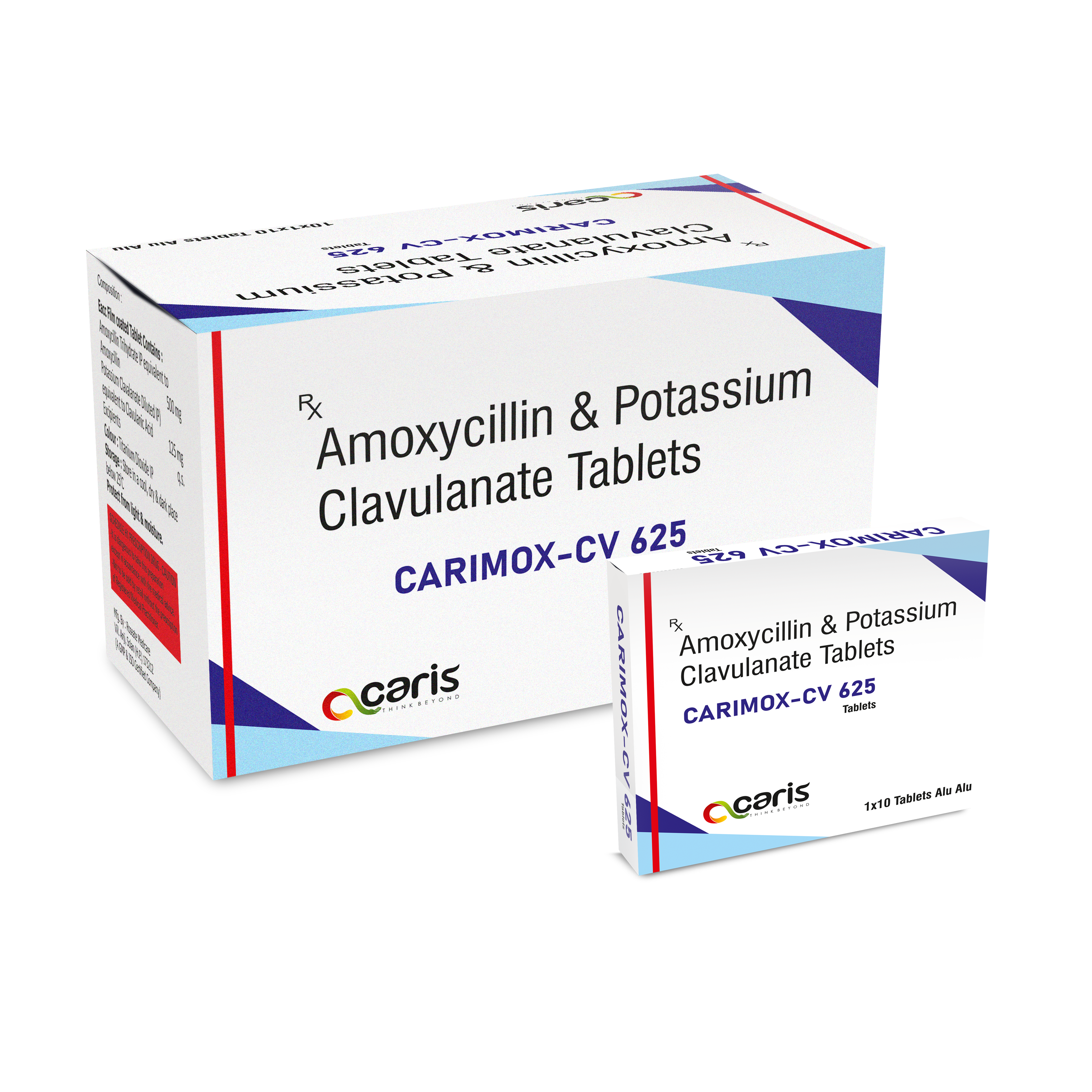
— Product
CARIMOX CV 625 TAB SS/ST
AMOXY 500MG + CLAUV POTASIUM 125MG
CARIMOX CV 625 TAB SS/ST is a tablet combining amoxicillin 500 mg with clavulanate potassium 125 mg. The clavulanate protects the amoxicillin from bacterial beta-lactamase, extending its cover to resistant organisms. It is used for sinusitis, otitis media, lower respiratory tract infection, urinary tract infection, and skin, soft-tissue, dental and bite-wound infections.
01
Benefits
- Clavulanate inhibits beta-lactamase, restoring amoxicillin's activity against organisms that would otherwise destroy it.
- Covers beta-lactamase-producing Haemophilus influenzae, Moraxella catarrhalis, Staphylococcus aureus and many Enterobacteriaceae.
- A standard choice where a first-line amoxicillin course has failed, or where resistant organisms are likely.
- Good cover for the mixed aerobic and anaerobic flora of animal and human bite wounds and of dental infection.
- Twice-daily dosing of the 625 mg strength is convenient and well established.
02
Side effects
Not everyone gets these. Most are mild and settle as the course finishes.
Common
- Diarrhoea, which is notably more frequent than with amoxicillin alone
- Nausea or vomiting
- Abdominal discomfort
- Skin rash
Less common
- Oral or vaginal thrush after the course
- Raised liver enzymes on testing
- Headache or dizziness
- Indigestion
Stop and get medical help if any of these occur
- Swelling of the face, lips or tongue, difficulty breathing, or collapse
- Yellowing of the skin or eyes, dark urine, or pale stools
- Severe, watery or bloody diarrhoea during or in the weeks after the course
- Widespread rash with blistering or peeling skin
- Unusual bruising or bleeding
03
Precautions
- Contraindicated in known penicillin allergy, and in any previous history of amoxicillin-clavulanate-associated jaundice or hepatic dysfunction.
- Clavulanate carries a real risk of cholestatic jaundice, more so in the elderly, in men, and with courses beyond two weeks. Keep courses short.
- Take with food, which improves absorption of the clavulanate and substantially reduces the diarrhoea.
- Dose reduction is required in significant renal impairment.
- Avoid in suspected infectious mononucleosis.
- Complete the full prescribed course, and do not use a leftover course for a new infection.
- Use with caution where there is a cephalosporin allergy.
- Generally considered acceptable in pregnancy and breastfeeding, but use on medical advice.