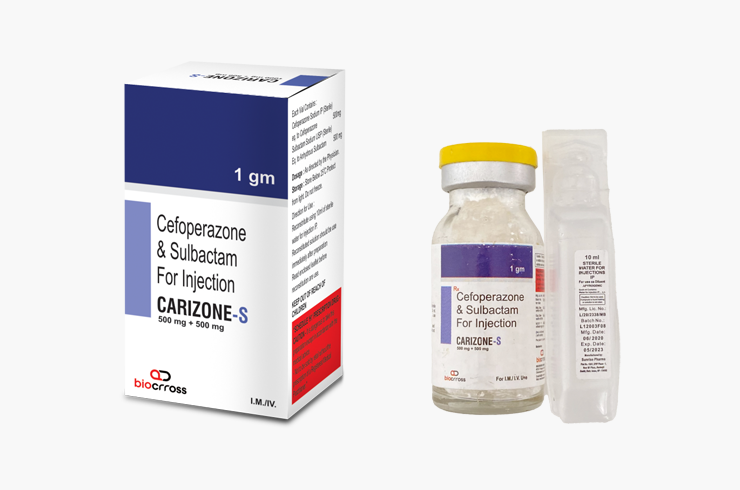
— Product
CARIZONE-S 1GM INJ
CEFOPERAZONE 0.5GM + SULBACTAM 0.5GM
CARIZONE-S 1GM INJ is an injection of cefoperazone 0.5 g with sulbactam 0.5 g, a third-generation cephalosporin combined with a beta-lactamase inhibitor. It is used in hospital for serious infections — intra-abdominal, biliary, respiratory, urinary, gynaecological, skin and soft-tissue infection, and septicaemia — caused by susceptible organisms.
01
Benefits
- Sulbactam inhibits beta-lactamase, restoring cefoperazone's activity against resistant Gram-negative organisms and adding cover against Acinetobacter.
- Broad Gram-negative cover including Pseudomonas aeruginosa, with useful anaerobic activity.
- Cefoperazone is excreted largely in bile, giving high biliary concentrations useful in biliary tract infection and requiring no dose adjustment in renal impairment.
- Sulbactam has intrinsic activity against Acinetobacter baumannii, a significant hospital pathogen.
- Well suited to polymicrobial intra-abdominal and pelvic infection where aerobic and anaerobic organisms coexist.
02
Side effects
Not everyone gets these. Most are mild and settle as the course finishes.
Common
- Pain or induration at the injection site
- Diarrhoea or loose stools
- Nausea or vomiting
- Skin rash
Less common
- Raised liver enzymes on testing
- Prolonged prothrombin time
- Low white cell or platelet count with prolonged therapy
- Fever or eosinophilia
Stop and get medical help if any of these occur
- Swelling of the face, lips or tongue, difficulty breathing, or collapse
- Unusual bruising or bleeding, or bleeding from the gums or injection sites
- Severe, watery or bloody diarrhoea during or in the weeks after the course
- Widespread rash with blistering or peeling skin
- Flushing, sweating, headache and rapid heartbeat after alcohol
03
Precautions
- Cefoperazone can prolong the prothrombin time and cause bleeding, particularly in the malnourished, the elderly, in renal or hepatic impairment, and with prolonged courses. Monitor prothrombin time; vitamin K supplementation is often required.
- Causes a disulfiram-like reaction with alcohol. The patient must avoid alcohol during treatment and for several days afterwards.
- Contraindicated in known cephalosporin allergy; use with caution in penicillin allergy and avoid entirely after penicillin anaphylaxis.
- Cefoperazone is biliary-excreted, so dose adjustment is needed in significant hepatic impairment or biliary obstruction rather than in renal impairment.
- For administration by a qualified healthcare professional only.
- Do not mix in the same syringe or line as an aminoglycoside.
- Monitor blood counts and liver function during prolonged courses.
- Use in pregnancy and breastfeeding only where clearly indicated.