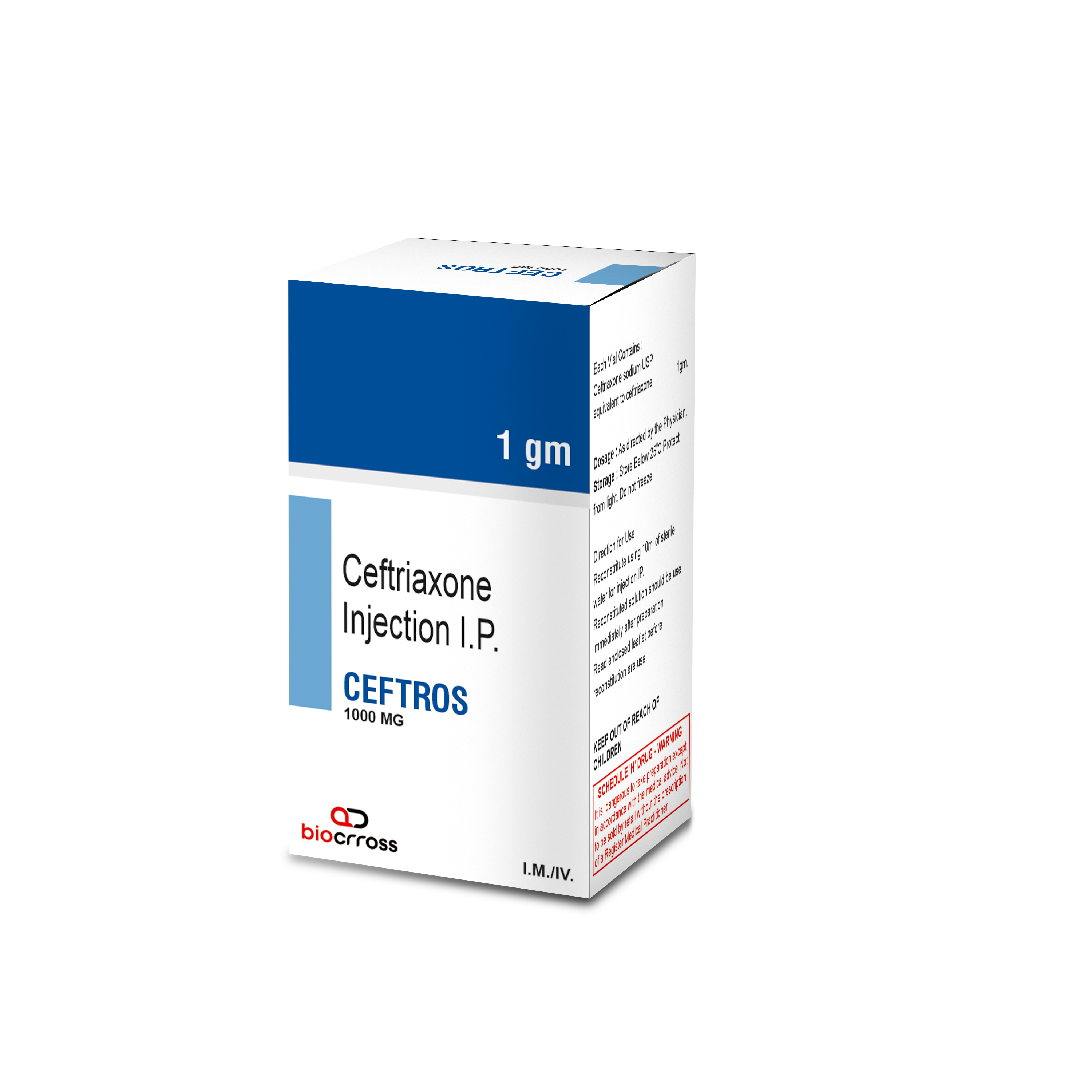
— Product
CEFTROS 1GM INJ
CEFTRIAXONE 1GM INJ
CEFTROS 1GM INJ is an injection of ceftriaxone 1 g, a third-generation cephalosporin given intramuscularly or intravenously. It is used for serious infections — pneumonia, meningitis, septicaemia, complicated urinary tract and intra-abdominal infection, typhoid fever, gonorrhoea and surgical prophylaxis.
01
Benefits
- Broad Gram-negative and useful Gram-positive cover, and one of the mainstays of empirical therapy in serious community-acquired infection.
- Penetrates the cerebrospinal fluid well, making it a first-line agent in bacterial meningitis.
- The long half-life allows once-daily dosing, which is unusual among cephalosporins and simplifies both inpatient and outpatient therapy.
- Single-dose intramuscular treatment is standard for uncomplicated gonorrhoea.
- Dual biliary and renal excretion means no dose adjustment is needed in mild to moderate renal impairment.
- Widely used for surgical prophylaxis and in enteric fever.
02
Side effects
Not everyone gets these. Most are mild and settle as the course finishes.
Common
- Pain or induration at the injection site
- Diarrhoea or loose stools
- Nausea
- Skin rash
Less common
- Raised liver enzymes on testing
- Eosinophilia or low white cell count
- Biliary sludging, sometimes with right-upper-abdominal discomfort
- Thrombophlebitis at the infusion site
Stop and get medical help if any of these occur
- Swelling of the face, lips or tongue, difficulty breathing, or collapse
- Severe, watery or bloody diarrhoea during or in the weeks after the course
- Widespread rash with blistering or peeling skin
- Yellowing of the skin or eyes, or severe right-upper-abdominal pain
- Reduced urine output or blood in the urine
03
Precautions
- Contraindicated in neonates receiving or expected to receive calcium-containing intravenous fluids — ceftriaxone-calcium precipitates have caused fatal lung and kidney damage in newborns.
- Contraindicated in hyperbilirubinaemic neonates and in premature infants, as ceftriaxone displaces bilirubin from albumin.
- Contraindicated in known cephalosporin allergy; use with caution in penicillin allergy and avoid entirely after penicillin anaphylaxis.
- Do not mix or co-administer through the same line with calcium-containing solutions, including Ringer's lactate, at any age.
- Do not mix in the same syringe or line as an aminoglycoside.
- Biliary sludging can occur, particularly with high doses and prolonged courses — usually reversible on stopping.
- Dose adjustment is required where both renal and hepatic function are significantly impaired.
- For administration by a qualified healthcare professional only.