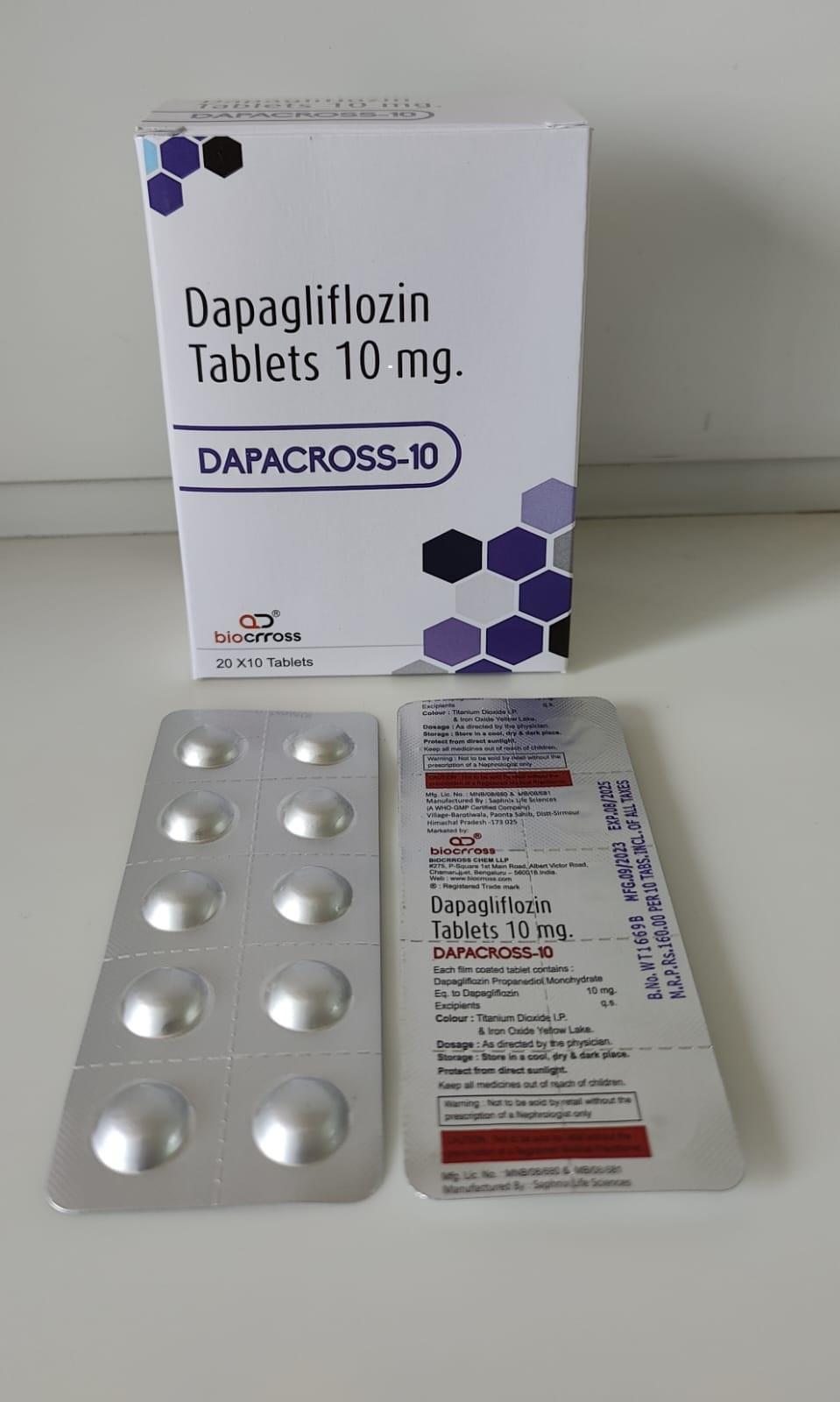
— Product
DAPACROSS-10MG TAB
DAPAGLIFLOZIN 10MG
DAPACROSS-10MG TAB is a tablet of dapagliflozin 10 mg, an SGLT2 inhibitor. It is used in type 2 diabetes mellitus to improve glycaemic control at the standard maintenance strength, and in appropriate patients for its established cardiovascular and renal protective effects.
01
Benefits
- Lowers blood glucose by blocking renal glucose reabsorption, independent of insulin secretion or sensitivity.
- The 10 mg dose is the strength at which the cardiovascular and renal outcome benefits of dapagliflozin were established.
- Reduces hospitalisation for heart failure and slows the progression of chronic kidney disease in suitable patients.
- Produces modest weight loss and a modest fall in blood pressure.
- Low risk of hypoglycaemia when used alone, as the action is glucose-dependent.
- Once-daily dosing, taken with or without food.
02
Side effects
Not everyone gets these. Most are mild and settle as the course finishes.
Common
- Genital fungal infection — thrush in women, balanitis in men
- Urinary tract infection
- Increased urine output and thirst
- Dizziness on standing
Less common
- Dehydration and a fall in blood pressure
- Rise in serum creatinine on starting, usually settling
- Constipation or nausea
- Back pain
Stop and get medical help if any of these occur
- Nausea, vomiting, abdominal pain, deep rapid breathing or confusion — this may be ketoacidosis even with a near-normal blood glucose
- Severe pain, redness, swelling or blackening of the skin between the genitals and anus, with fever
- Fever with loin pain, or blood in the urine
- Marked dizziness, fainting or a very reduced urine output
- Signs of severe dehydration
03
Precautions
- Can cause euglycaemic diabetic ketoacidosis — ketoacidosis with a normal or only mildly raised glucose. Patients must know the symptoms and that a normal reading does not exclude it.
- Stop before major surgery, during acute serious illness, and during prolonged fasting or a very low carbohydrate diet.
- Contraindicated in type 1 diabetes and in a history of diabetic ketoacidosis.
- Genital fungal infection is common; counsel on hygiene and fluid intake before starting.
- Fournier's gangrene has been reported — perineal pain, redness or swelling with fever needs emergency assessment.
- Check renal function before starting and periodically; glucose-lowering efficacy falls as renal function declines.
- Use with caution alongside diuretics, insulin and sulphonylureas, where dose reduction of the latter two may be needed.
- Contraindicated in pregnancy and breastfeeding.