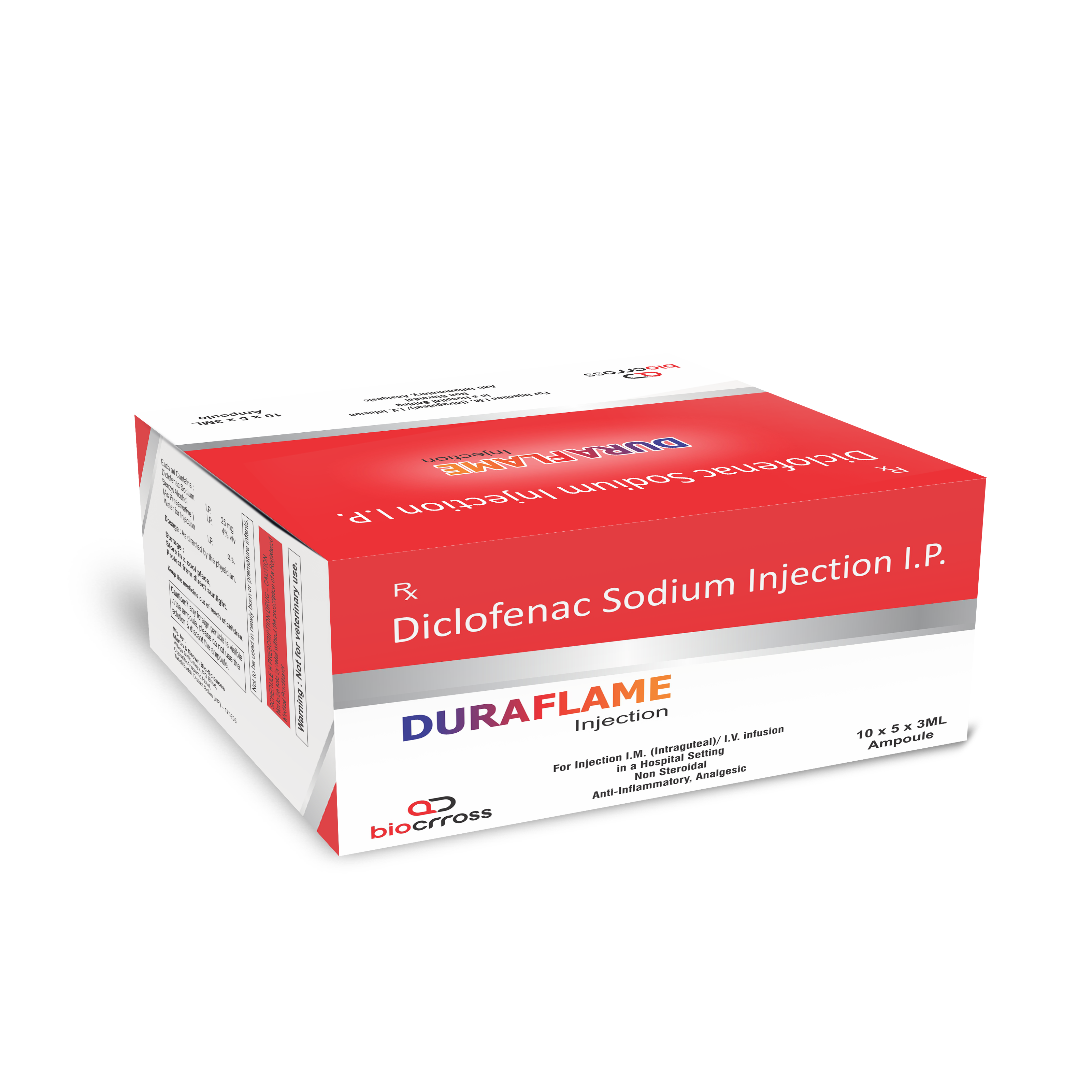
— Product
DURAFLAME INJ 3ML
DICLO 25MG 3ML INJ
DURAFLAME INJ 3ML is an injection of diclofenac 25 mg per ml in a 3 ml presentation, given by deep intramuscular injection. It is used for acute severe pain — renal and biliary colic, acute musculoskeletal injury, post-operative pain and acute arthritic flares — where rapid analgesia is needed.
01
Benefits
- Rapid onset by injection for severe acute pain where an oral dose would act too slowly.
- Highly effective in renal colic, where NSAIDs relieve pain and reduce ureteric smooth muscle activity.
- Useful post-operatively as part of a multimodal regimen, reducing opioid requirement.
- The 3 ml presentation allows dose flexibility for the prescriber.
- Provides potent anti-inflammatory as well as analgesic effect in acute arthritic flares.
02
Side effects
Not everyone gets these. Most are mild and settle as the course finishes.
Common
- Pain or induration at the injection site
- Nausea or epigastric discomfort
- Dizziness or headache
- Drowsiness
Less common
- Gastric erosion or bleeding
- Rise in blood pressure or fluid retention
- Raised liver enzymes
- Skin rash or itching
Stop and get medical help if any of these occur
- Black, tarry stools or vomiting of blood
- Chest pain, breathlessness, or weakness or numbness down one side
- Swelling of the face, lips or tongue, or difficulty breathing
- A marked fall in urine output
- Severe pain, redness or swelling at the injection site
03
Precautions
- For administration by a qualified healthcare professional, by deep intramuscular injection into the upper outer quadrant of the buttock.
- Contraindicated in established ischaemic heart disease, cerebrovascular disease, peripheral arterial disease and moderate to severe heart failure.
- Contraindicated in active peptic ulcer disease or a history of gastrointestinal bleeding.
- Contraindicated in severe hepatic or renal impairment, and in NSAID hypersensitivity including aspirin-sensitive asthma.
- Contraindicated in the third trimester of pregnancy.
- Limit to the shortest course possible before switching to an oral route.
- Ensure adequate hydration; NSAID-related renal injury is far more likely in a volume-depleted patient.
- Do not give alongside another NSAID.