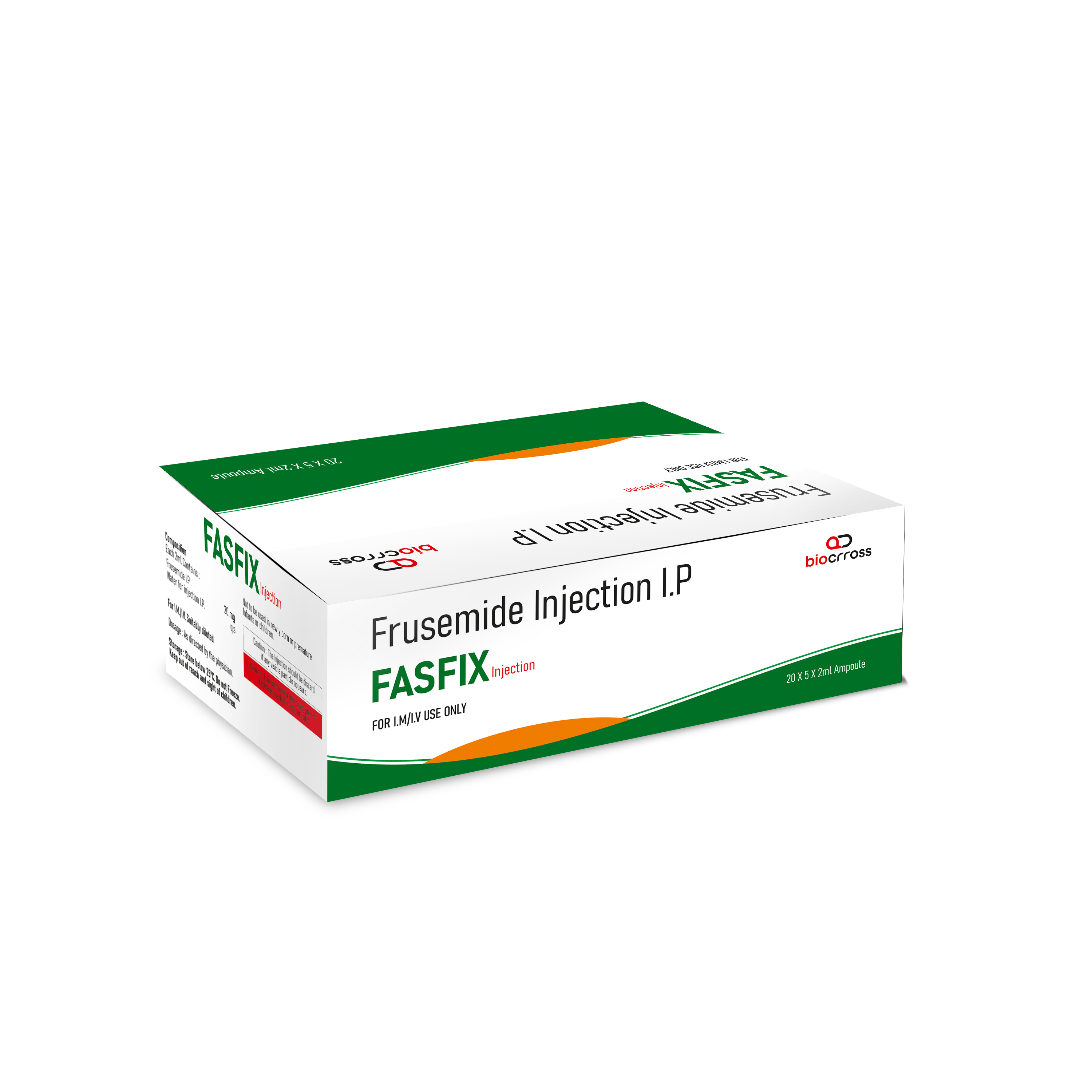
— Product
FASFIX 2ML INJ
FRUSEMIDE 2ML AMP INJ 10MG
FASFIX 2ML INJ is an injection of furosemide 10 mg per ml in a 2 ml ampoule, a potent loop diuretic given intramuscularly or by slow intravenous injection. It is used for acute pulmonary oedema, acute and chronic heart failure, oedema of renal or hepatic origin, and hypertensive emergencies with fluid overload.
01
Benefits
- Potent and rapid diuresis, with intravenous onset within minutes — the mainstay of treatment in acute pulmonary oedema.
- Furosemide also causes venodilation, which relieves pulmonary congestion before the diuresis itself takes effect.
- The injectable route works where gut oedema in decompensated heart failure impairs absorption of oral diuretics.
- Effective in oedema of renal and hepatic origin, including nephrotic syndrome and ascites.
- Remains effective at lower levels of renal function than thiazide diuretics.
02
Side effects
Not everyone gets these. Most are mild and settle as the course finishes.
Common
- Increased urine output and frequency
- Dizziness on standing or a fall in blood pressure
- Thirst and dry mouth
- Muscle cramps
Less common
- Low potassium, sodium or magnesium
- Rise in blood glucose and in serum uric acid, which can precipitate gout
- Rise in serum creatinine
- Ringing in the ears, particularly after rapid intravenous injection
Stop and get medical help if any of these occur
- Severe muscle weakness, cramps, or an irregular heartbeat
- Fainting or a marked fall in blood pressure
- Any new hearing loss or ringing in the ears
- Confusion or marked drowsiness
- A marked fall in urine output despite the diuretic
03
Precautions
- For administration by a qualified healthcare professional. Intravenous injection must be slow — rapid administration risks ototoxicity, which can be permanent.
- Contraindicated in anuria, in severe electrolyte depletion, and in known sulphonamide hypersensitivity.
- Monitor serum potassium, sodium, magnesium and renal function. Hypokalaemia is common and is dangerous in patients on digoxin.
- Ototoxicity risk rises with high doses, rapid injection, renal impairment, and concurrent aminoglycosides — avoid that combination where possible.
- Use with caution in hepatic cirrhosis, where over-diuresis can precipitate hepatic encephalopathy.
- Can precipitate acute urinary retention in men with significant prostatic enlargement.
- Use with caution alongside ACE inhibitors, angiotensin receptor blockers, NSAIDs and aminoglycosides.
- Use in pregnancy and breastfeeding only where clearly indicated.