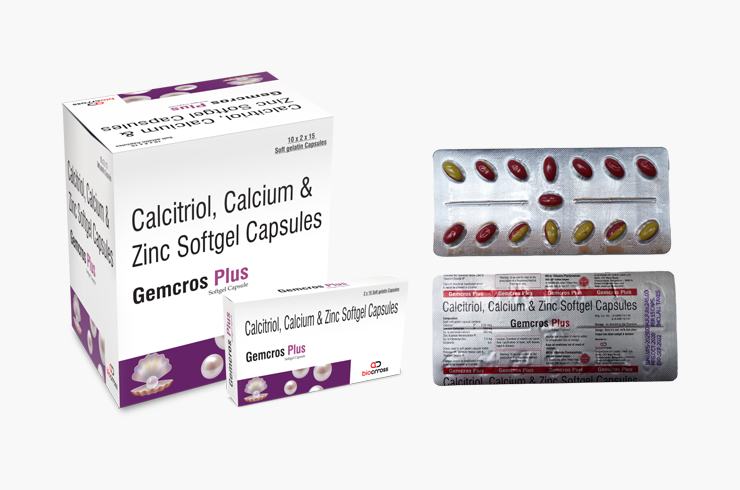
— Product
GEMCROS PLUS CAP(B/L)
CALCITRIOL 0.25MCG + CALCIUM CARBONATE 500MG + ZINC 7.5MG
GEMCROS PLUS CAP(B/L) is a capsule combining calcitriol 0.25 mcg, calcium carbonate 500 mg and zinc 7.5 mg. It is used in osteoporosis and osteopenia, in postmenopausal bone loss, in chronic kidney disease-related bone disease, and where calcium deficiency coexists with impaired vitamin D activation.
01
Benefits
- Calcitriol is the fully active form of vitamin D, requiring no activation by the liver or kidney — the reason it works where ordinary vitamin D does not.
- That makes it the appropriate choice in chronic kidney disease, where the kidney can no longer activate vitamin D.
- Calcium provides the mineral substrate for bone formation.
- Zinc is a cofactor in bone matrix formation and in the enzymes of bone turnover.
- Calcitriol directly increases intestinal calcium absorption, so the calcium given is used rather than excreted.
02
Side effects
Not everyone gets these. Most are mild and settle as the course finishes.
Common
- Constipation
- Nausea
- Metallic taste
- Bloating
Less common
- Raised blood calcium
- Increased thirst and frequent urination
- Loss of appetite
- Headache or muscle weakness
Stop and get medical help if any of these occur
- Marked thirst, frequent urination, confusion or unusual drowsiness (hypercalcaemia)
- Persistent nausea and vomiting with weakness
- Loin pain or blood in the urine
- Irregular heartbeat
- Bone pain or severe muscle weakness
03
Precautions
- Calcitriol is far more potent than ordinary vitamin D and has a narrow margin between effective and toxic. Serum calcium must be monitored regularly during treatment.
- Do not substitute calcitriol dose-for-dose with cholecalciferol or vice versa — they are not interchangeable.
- Contraindicated in hypercalcaemia, hypervitaminosis D, and in a history of calcium-containing kidney stones.
- Do not take another vitamin D or calcium preparation alongside without checking the total.
- Take with food. Calcium carbonate needs gastric acid for absorption and is poorly absorbed on an empty stomach.
- Separate from tetracycline and fluoroquinolone antibiotics, thyroid hormone, iron and bisphosphonates by at least two to four hours.
- Use with particular caution alongside thiazide diuretics and digoxin, where raised calcium is more dangerous.
- Maintain adequate fluid intake, and report early symptoms of hypercalcaemia promptly.