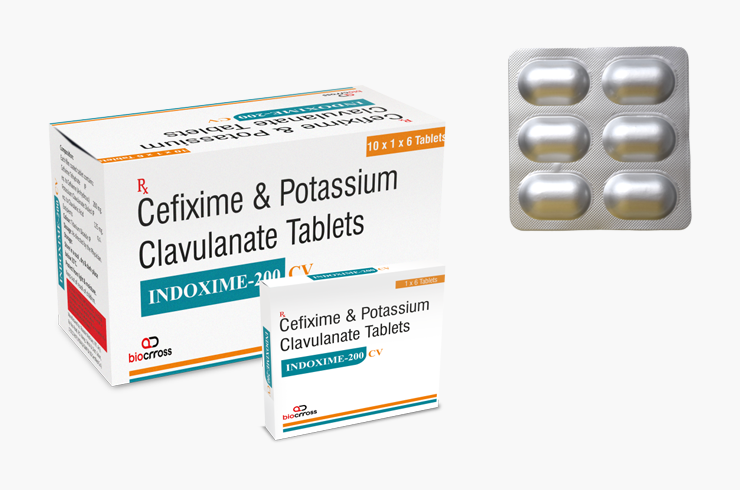
— Product
INDOXIME-200(OVAL)TAB
CEFIXIME 200MG
INDOXIME-200(OVAL)TAB is a tablet of cefixime 200 mg, a third-generation oral cephalosporin. It is used for respiratory tract infections, otitis media, pharyngitis and tonsillitis, sinusitis, typhoid fever, gonorrhoea and urinary tract infection caused by susceptible organisms.
01
Benefits
- Good activity against Gram-negative organisms including beta-lactamase-producing Haemophilus influenzae and Moraxella catarrhalis.
- Once- or twice-daily dosing improves adherence over older cephalosporins requiring four daily doses.
- An established oral option in uncomplicated typhoid fever, avoiding injectable therapy.
- Absorption is not significantly affected by food.
- Useful oral step-down after initial injectable cephalosporin therapy in hospital.
02
Side effects
Not everyone gets these. Most are mild and settle as the course finishes.
Common
- Diarrhoea or loose stools
- Nausea or vomiting
- Abdominal discomfort
- Skin rash
Less common
- Oral or vaginal thrush after the course
- Raised liver enzymes on testing
- Headache or dizziness
- Flatulence
Stop and get medical help if any of these occur
- Swelling of the face, lips or tongue, difficulty breathing, or collapse
- Severe, watery or bloody diarrhoea during or in the weeks after the course
- Widespread rash with blistering or peeling skin
- Yellowing of the skin or eyes
- Reduced urine output or blood in the urine
03
Precautions
- Contraindicated in known cephalosporin allergy; use with caution in penicillin allergy and avoid entirely after penicillin anaphylaxis.
- Dose reduction is required in significant renal impairment.
- Complete the full prescribed course even once symptoms settle, to limit the emergence of resistance.
- Diarrhoea is common with cefixime; maintain fluid intake and report severe or bloody diarrhoea.
- Ineffective against viral infections; most colds and sore throats do not need it.
- Cefixime has poor activity against Staphylococcus aureus — it is not an appropriate choice for most skin and soft-tissue infection.
- Use in pregnancy and breastfeeding only where clearly indicated.