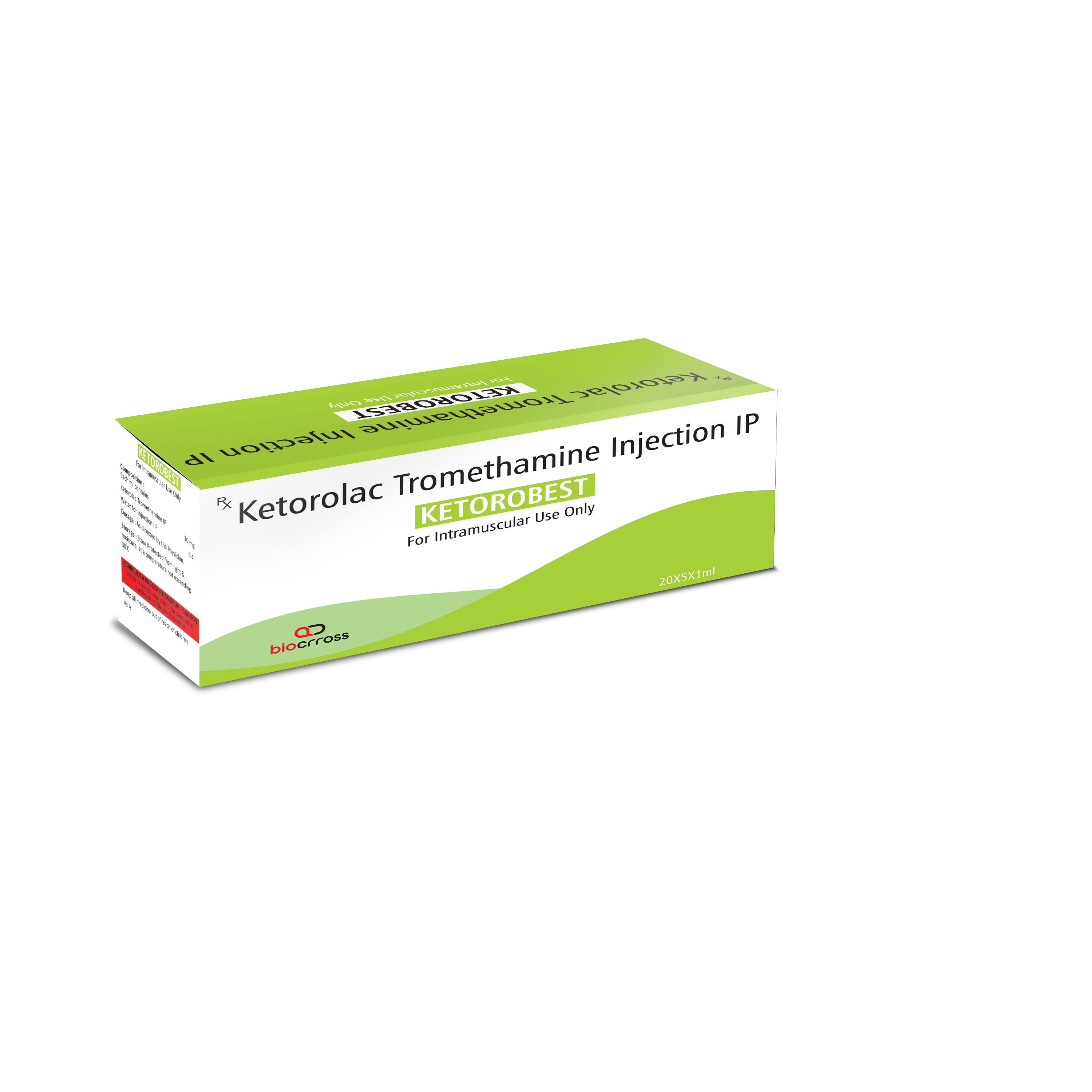
— Product
KETOROBEST INJ 1ML
KETROLAC TROMETHAMINE 30MG INJ
KETOROBEST INJ 1ML is an injection of ketorolac tromethamine 30 mg in 1 ml, a potent NSAID given intramuscularly or intravenously. It is used for the short-term management of moderate to severe acute pain — post-operative pain, renal colic and acute musculoskeletal injury — where opioid-level analgesia is needed without an opioid.
01
Benefits
- One of the most potent injectable NSAIDs, with analgesia in acute pain approaching that of low-dose opioids.
- Causes no respiratory depression, sedation or dependence, unlike opioids.
- Reduces opioid requirement substantially when used as part of a multimodal post-operative regimen.
- Highly effective in renal colic, where NSAIDs relieve pain and reduce ureteric smooth muscle activity.
- Rapid onset by the injectable route where oral analgesia is impractical or too slow.
02
Side effects
Not everyone gets these. Most are mild and settle as the course finishes.
Common
- Pain at the injection site
- Nausea or vomiting
- Drowsiness or dizziness
- Headache
Less common
- Epigastric discomfort or dyspepsia
- Fluid retention or a rise in blood pressure
- Sweating
- Rise in serum creatinine
Stop and get medical help if any of these occur
- Black, tarry stools or vomiting of blood
- Unusual bruising or bleeding, or bleeding from a surgical wound
- A marked fall in urine output
- Chest pain, breathlessness, or weakness down one side
- Swelling of the face, lips or tongue, or difficulty breathing
03
Precautions
- Ketorolac is restricted to a maximum of five days of treatment in total, by any route. Its gastrointestinal and renal toxicity is substantially higher than that of other NSAIDs, and rises sharply with duration.
- Contraindicated in active or previous peptic ulceration or gastrointestinal bleeding, and in patients at high risk of bleeding.
- Contraindicated in significant renal impairment, in volume depletion, and in patients at risk of renal failure — ketorolac is a well-recognised cause of acute kidney injury.
- Contraindicated in coagulation disorders, alongside anticoagulants, and before or during any procedure with a high bleeding risk, as it inhibits platelet function.
- Contraindicated in NSAID or aspirin hypersensitivity including aspirin-sensitive asthma, in labour and delivery, and in breastfeeding.
- Reduce the dose in the elderly and in patients under 50 kg, in whom toxicity is markedly more likely.
- Do not give alongside another NSAID by any route, and use with caution with ACE inhibitors and diuretics.
- For administration by a qualified healthcare professional only; ensure adequate hydration throughout.