— Product
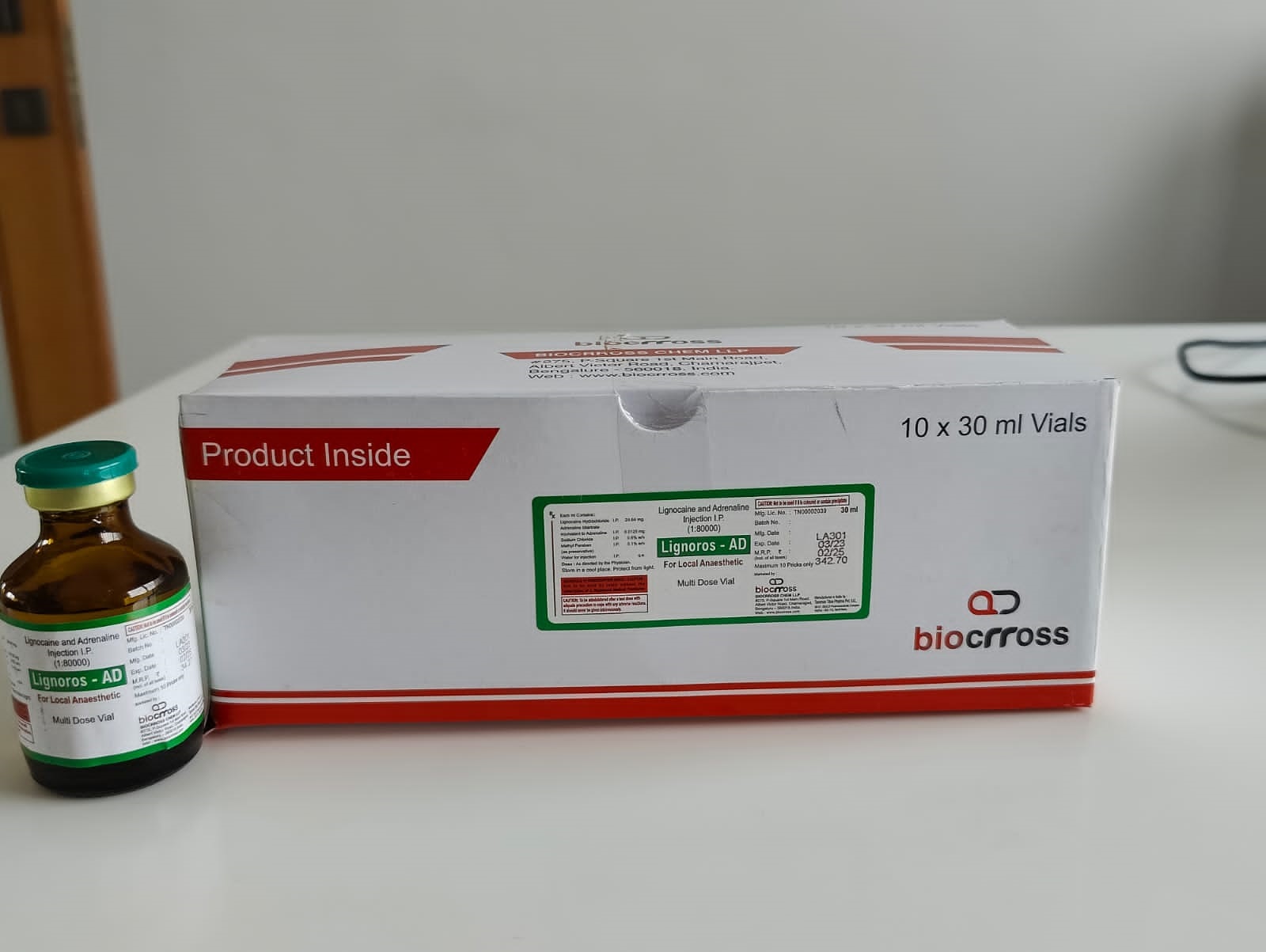
LIGNOROS-AD INJ 30ML
LIGNOCAINE + ADRENELIN INJ
LIGNOROS-AD INJ 30ML is a 30 ml vial of lignocaine with adrenaline injection, a local anaesthetic combined with a vasoconstrictor. It is used for infiltration anaesthesia and nerve block in minor surgery and dental procedures, where the adrenaline prolongs the block and reduces bleeding at the site.
01
Benefits
- Adrenaline constricts local blood vessels, slowing absorption of the lignocaine and roughly doubling the duration of anaesthesia.
- Slower absorption also lowers peak blood levels, allowing a larger safe dose than plain lignocaine.
- Vasoconstriction reduces bleeding into the operative field, which improves visibility in minor surgery and dentistry.
- The longer block avoids the need for repeat injection during a longer procedure.
- The multi-dose vial suits dental surgeries and minor procedure rooms.
02
Side effects
Not everyone gets these. Most are mild and settle as the course finishes.
Common
- Pain or stinging during injection
- Palpitations or a transient rise in heart rate from the adrenaline
- Blanching of the skin at the injection site
- Anxiety or tremor
Less common
- Rise in blood pressure
- Headache
- Prolonged numbness
- Delayed wound healing at the injection site
Stop and get medical help if any of these occur
- Dizziness, ringing in the ears, metallic taste, numbness of the tongue or lips, or confusion
- Seizures
- Chest pain, or a fast or markedly irregular heartbeat
- Swelling of the face, lips or tongue, or difficulty breathing
- Persistent pallor, coldness or blackening of a digit or the tissue around the injection site
03
Precautions
- Never use adrenaline-containing local anaesthetic in the fingers, toes, nose, ears or penis. Vasoconstriction in an end-artery territory can cause tissue necrosis.
- For administration by a qualified healthcare professional, with resuscitation equipment and lipid emulsion available.
- Always aspirate before injecting; inadvertent intravascular injection of adrenaline can cause severe hypertension and arrhythmia.
- Use with caution or avoid in ischaemic heart disease, uncontrolled hypertension, significant arrhythmia and hyperthyroidism.
- Use with caution in patients on tricyclic antidepressants, monoamine oxidase inhibitors or non-selective beta-blockers, where the adrenaline effect is exaggerated.
- Contraindicated in known hypersensitivity to amide local anaesthetics, and in complete heart block.
- Observe the maximum dose by body weight, and warn the patient not to eat or handle hot objects until sensation returns.
- Multi-dose vial: strict aseptic technique at every withdrawal; discard after the stated in-use period.