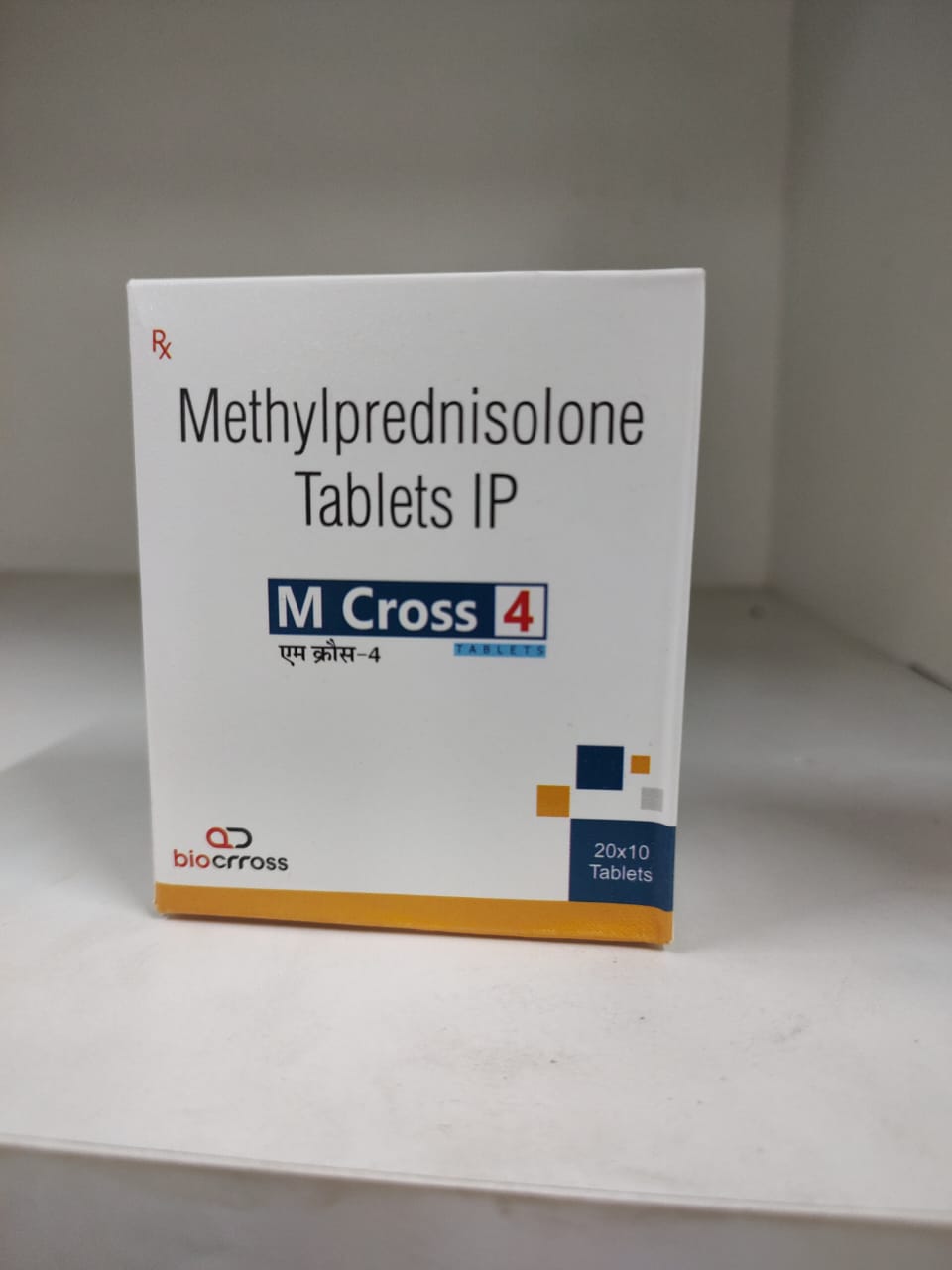
— Product
M CROSS 4 TAB AL/AL
METHYLPREDNSIOLONE 4MG
M CROSS 4 TAB AL/AL is a tablet of methylprednisolone 4 mg, a corticosteroid. It is used in inflammatory and autoimmune conditions — rheumatoid arthritis, asthma, allergic disorders, inflammatory bowel disease, skin conditions and connective tissue disease — where systemic corticosteroid therapy is indicated.
01
Benefits
- Potent anti-inflammatory and immunosuppressive action across a wide range of inflammatory and autoimmune conditions.
- Minimal mineralocorticoid activity, so it causes less sodium and water retention than hydrocortisone or prednisolone.
- The 4 mg strength allows flexible titration and controlled tapering, and suits the tapering dose packs commonly used for short courses.
- Effective in asthma exacerbations, allergic reactions and inflammatory flares where a short oral course is needed.
- Once-daily morning dosing matches the natural cortisol rhythm and reduces adrenal suppression.
02
Side effects
Not everyone gets these. Most are mild and settle as the course finishes.
Common
- Increased appetite and weight gain
- Rise in blood glucose
- Insomnia, restlessness or mood change
- Indigestion
Less common
- Rise in blood pressure and fluid retention
- Acne, thinning skin or easy bruising
- Muscle weakness, particularly of the thighs and shoulders
- Menstrual irregularity
Stop and get medical help if any of these occur
- Signs of infection — fever, sore throat, cough — as steroids mask and worsen infection
- Severe abdominal pain, or black or tarry stools
- Marked confusion, agitation or psychotic symptoms
- Very high blood glucose with thirst, frequent urination and drowsiness
- Sudden severe hip, shoulder or knee pain, which may indicate avascular necrosis
- Blurred vision or eye pain
03
Precautions
- Never stop abruptly after more than a short course. Prolonged use suppresses the adrenal axis, and sudden withdrawal can cause an adrenal crisis. Taper under supervision.
- Corticosteroids mask the signs of infection and impair the response to it. Chickenpox and measles can be severe in a steroid-treated patient without immunity.
- Live vaccines are contraindicated during and shortly after significant corticosteroid therapy.
- Raises blood glucose. Diabetic patients need closer monitoring and often an increase in their usual therapy.
- Prolonged use causes osteoporosis; bone protection should be considered for courses beyond three months.
- Use with caution in peptic ulcer disease, uncontrolled hypertension, heart failure, glaucoma, epilepsy and psychiatric illness.
- Take in the morning with food. Patients on long-term therapy should carry a steroid card.
- Use in pregnancy and breastfeeding only where clearly indicated.