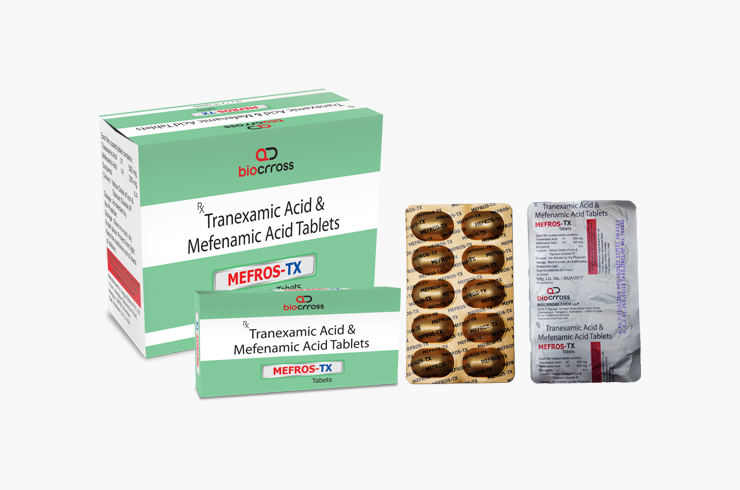
— Product
MEFROS-TX TAB MC
MEFENAMIC ACID 250MG + TRANEXAMIC ACID 500MG
MEFROS-TX TAB MC is a tablet combining mefenamic acid 250 mg with tranexamic acid 500 mg. It is used for heavy menstrual bleeding, particularly where it is accompanied by period pain, pairing an antifibrinolytic that reduces blood loss with an NSAID that reduces both loss and pain.
01
Benefits
- Tranexamic acid inhibits fibrinolysis in the endometrium, substantially reducing menstrual blood loss — often by a third to a half.
- Mefenamic acid reduces menstrual loss further and, unlike tranexamic acid, also relieves the cramping pain.
- Together they address the two symptoms — heavy bleeding and pain — that most often occur together in menorrhagia.
- Non-hormonal, so it suits women who cannot use or do not want hormonal treatment.
- Taken only during the days of bleeding rather than continuously through the cycle.
02
Side effects
Not everyone gets these. Most are mild and settle as the course finishes.
Common
- Nausea or vomiting
- Diarrhoea, which is more frequent with mefenamic acid
- Abdominal pain or indigestion
- Headache or dizziness
Less common
- Gastric erosion or ulceration
- Muscle cramps
- Skin rash or itching
- Visual disturbance
Stop and get medical help if any of these occur
- Pain, swelling, warmth or redness in a calf, or sudden breathlessness or chest pain — this may be a clot
- Any change in vision or colour perception
- Severe or persistent diarrhoea
- Black, tarry stools or vomiting of blood
- Severe headache, or weakness or numbness down one side
03
Precautions
- Tranexamic acid increases the risk of thrombosis. Contraindicated in active thromboembolic disease, in a history of deep vein thrombosis or pulmonary embolism, and in patients with a known thrombophilia.
- Use with caution alongside combined hormonal contraceptives, which independently raise thrombotic risk.
- Contraindicated in a history of seizures and in subarachnoid haemorrhage.
- Heavy menstrual bleeding needs a diagnosis. Fibroids, polyps, thyroid disease, bleeding disorders and endometrial pathology all require different management, and treating symptomatically can delay that.
- Contraindicated in active peptic ulcer disease, inflammatory bowel disease, severe hepatic or renal impairment, and NSAID hypersensitivity.
- Diarrhoea with mefenamic acid is a reason to stop the drug.
- Report any visual disturbance immediately and stop the medicine.
- Dose reduction is required in renal impairment; take with or after food and limit to the days of bleeding.