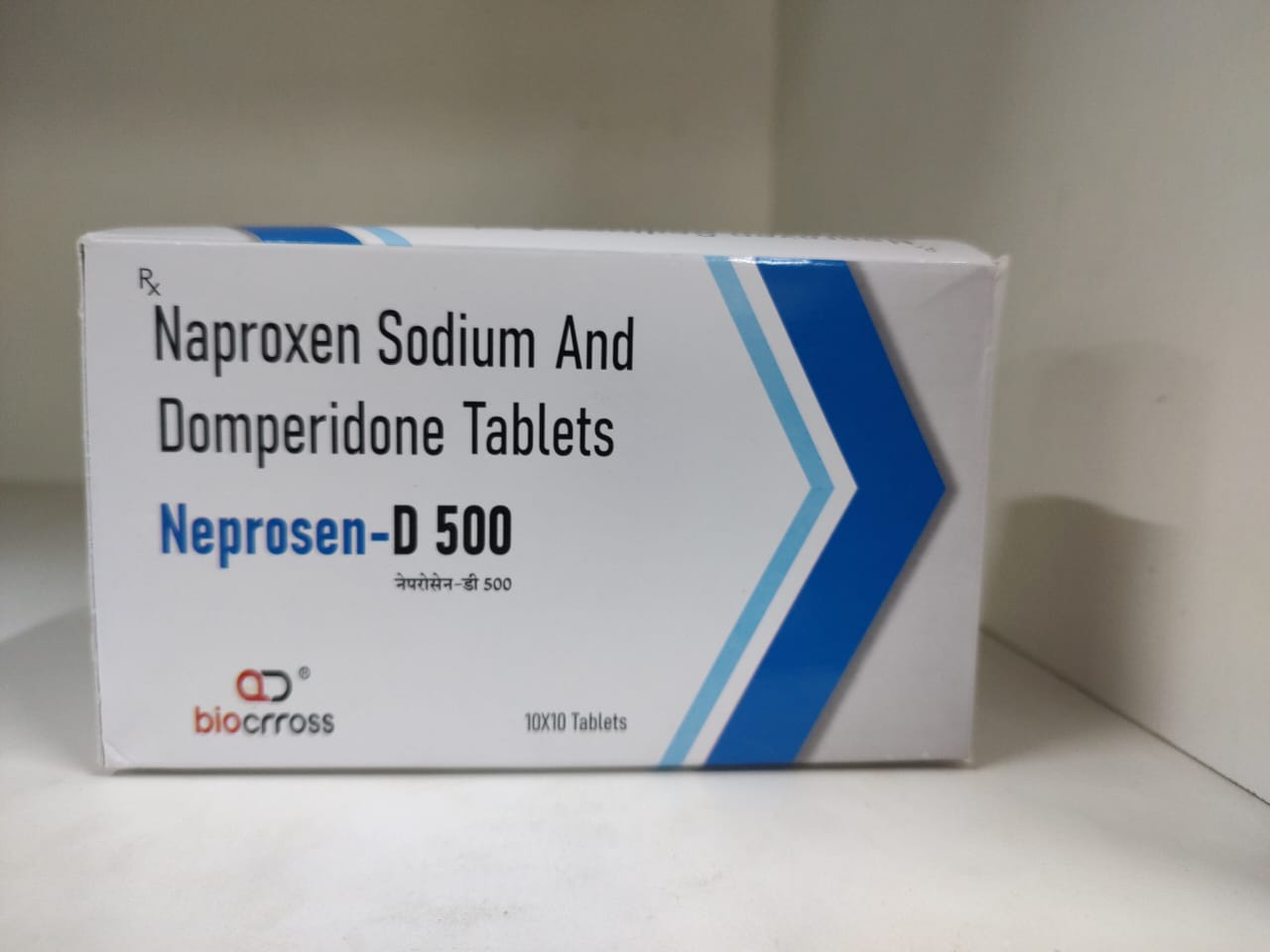
— Product
NEPROSEN-D 500 TAB(S T)
NAPROXEN 500MG + DOMPERIDONE 10MG
NEPROSEN-D 500 TAB(S T) is a tablet of naproxen 500 mg with domperidone 10 mg, at the higher naproxen strength. It is used for pain and inflammation in arthritis, musculoskeletal disorders, acute gout and migraine, where the 250 mg strength is insufficient.
01
Benefits
- The 500 mg strength provides fuller anti-inflammatory cover for inflammatory arthritis and acute gout.
- Naproxen's long duration of action allows twice-daily dosing.
- Lower cardiovascular risk than diclofenac and the coxibs, making it a preferred NSAID in patients with cardiovascular risk factors.
- Domperidone relieves the nausea that accompanies migraine and that NSAIDs can provoke.
- Domperidone speeds gastric emptying, improving naproxen absorption during a migraine attack.
02
Side effects
Not everyone gets these. Most are mild and settle as the course finishes.
Common
- Nausea, indigestion or epigastric discomfort
- Abdominal pain or diarrhoea
- Headache or dizziness
- Dry mouth
Less common
- Gastric erosion, ulceration or gastrointestinal bleeding
- Fluid retention or a rise in blood pressure
- Breast tenderness or milk secretion from raised prolactin
- Skin rash or itching
Stop and get medical help if any of these occur
- Palpitations, fainting or an irregular heartbeat
- Black, tarry stools or vomiting of blood
- Muscle stiffness, tremor, restlessness or involuntary movements
- Yellowing of the skin or eyes
- A marked fall in urine output
- Widespread rash with blistering or peeling skin
03
Precautions
- Domperidone prolongs the QT interval and has been associated with serious arrhythmia and sudden cardiac death. Use at the lowest effective dose for the shortest period, generally no more than a week.
- Contraindicated alongside other QT-prolonging drugs and strong CYP3A4 inhibitors.
- Contraindicated in active peptic ulcer disease, gastrointestinal haemorrhage, mechanical obstruction and prolactin-releasing pituitary tumour.
- Contraindicated in severe hepatic or renal impairment, and in NSAID hypersensitivity including aspirin-sensitive asthma.
- Gastrointestinal risk rises with NSAID dose — consider gastroprotection in patients at risk at this strength.
- Avoid in the third trimester of pregnancy; use earlier in pregnancy and while breastfeeding only on medical advice.
- Take with or after food, and avoid alcohol during the course.
- Use with caution in the elderly and alongside anticoagulants, corticosteroids or other NSAIDs.