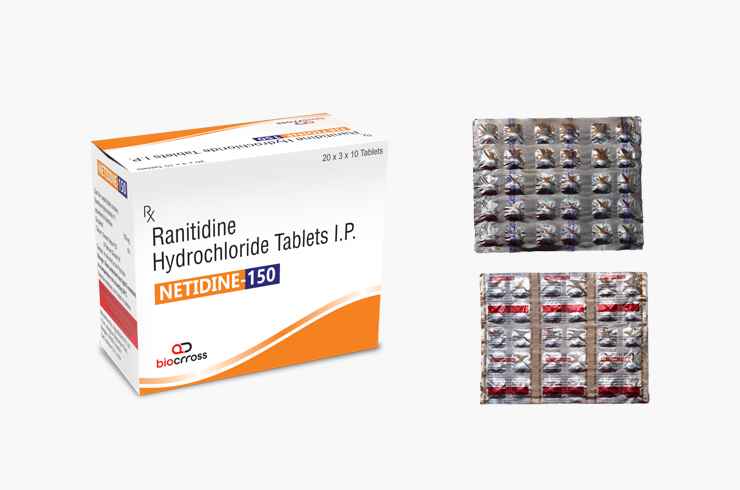
— Product
NETIDINE 150MG TAB
RANITIDINE 150MG
NETIDINE 150MG TAB is a tablet of ranitidine 150 mg, an H2 receptor antagonist that reduces gastric acid production. It is used for peptic ulcer disease, gastro-oesophageal reflux, acid dyspepsia and the prevention of NSAID-related gastric injury.
01
Benefits
- Blocks histamine H2 receptors on gastric parietal cells, reducing acid secretion for around twelve hours.
- Effective for night-time acid symptoms, which respond particularly well to H2 blockade.
- Faster onset than a proton pump inhibitor, giving relief within an hour.
- Useful for on-demand symptom relief where continuous acid suppression is not needed.
- An alternative in patients who cannot tolerate proton pump inhibitors.
02
Side effects
Not everyone gets these. Most are mild and settle as the course finishes.
Common
- Headache
- Constipation or diarrhoea
- Nausea or abdominal discomfort
- Dizziness
Less common
- Skin rash
- Fatigue
- Raised liver enzymes on testing
- Confusion in the elderly or in renal impairment
Stop and get medical help if any of these occur
- Black or tarry stools, or vomiting of blood
- Difficulty or pain on swallowing
- Unexplained weight loss or persistent vomiting
- Yellowing of the skin or eyes
- Confusion, agitation or hallucinations
- Slow or irregular heartbeat
03
Precautions
- Ranitidine has been withdrawn or restricted in several countries following the detection of NDMA, a probable carcinogen, in some batches. Prescribers should be aware of the current regulatory position and of the widely available alternatives.
- Acid suppression can mask the symptoms of gastric malignancy. Alarm features — weight loss, difficulty swallowing, vomiting blood, black stools, anaemia — need investigation before starting.
- Dose reduction is required in significant renal impairment, where accumulation causes confusion, particularly in the elderly.
- Reduced gastric acidity impairs the absorption of ketoconazole, itraconazole and iron — separate doses or reconsider the combination.
- Not for long-term use without review; persistent symptoms need a diagnosis.
- Contraindicated in known hypersensitivity to ranitidine.
- Use in pregnancy and breastfeeding only on medical advice.