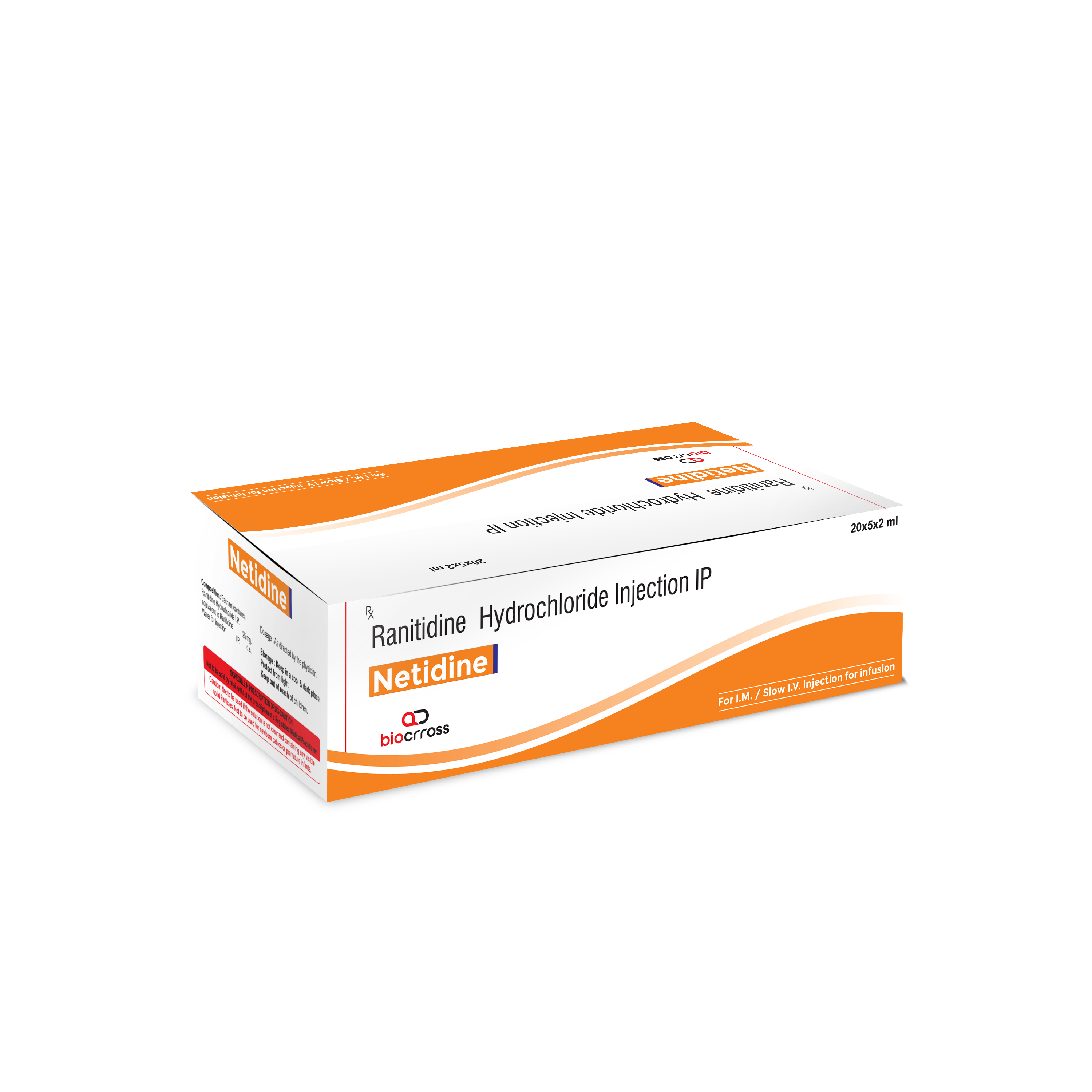
— Product
NETIDINE 2ML AMP
RANITIDINE 25MG 2ML INJ
NETIDINE 2ML AMP is an injection of ranitidine 25 mg per ml in a 2 ml ampoule, an H2 receptor antagonist given intramuscularly or by slow intravenous injection. It is used where oral therapy is impractical — in acute upper gastrointestinal bleeding, stress ulcer prophylaxis, and as pre-operative aspiration prophylaxis.
01
Benefits
- The injectable route works where the patient is vomiting, nil by mouth, or unable to absorb oral medication.
- Rapid reduction of gastric acid secretion, useful in acute settings.
- Used pre-operatively to raise gastric pH and reduce the risk of acid aspiration during anaesthesia.
- Used for stress ulcer prophylaxis in critically ill patients.
- Convenient small-volume ampoule for ward and theatre use.
02
Side effects
Not everyone gets these. Most are mild and settle as the course finishes.
Common
- Pain or stinging at the injection site
- Headache
- Dizziness
- Nausea
Less common
- Transient fall in blood pressure after rapid intravenous injection
- Skin rash
- Raised liver enzymes
- Confusion in the elderly or in renal impairment
Stop and get medical help if any of these occur
- Slow or irregular heartbeat, particularly after rapid intravenous injection
- Confusion, agitation or hallucinations
- Swelling of the face, lips or tongue, or difficulty breathing
- Yellowing of the skin or eyes
- Continued vomiting of blood or passage of black stools
03
Precautions
- For administration by a qualified healthcare professional. Intravenous doses must be diluted and given slowly — rapid injection can cause bradycardia and hypotension.
- Ranitidine has been withdrawn or restricted in several countries following NDMA detection; prescribers should be aware of the current regulatory position.
- Dose reduction is required in significant renal impairment.
- Acid suppression treats the acid, not the bleeding — active upper gastrointestinal haemorrhage needs endoscopic assessment and management.
- Contraindicated in known hypersensitivity to ranitidine.
- Use with caution in the elderly, where confusion is more likely.
- Use in pregnancy and breastfeeding only where clearly indicated.