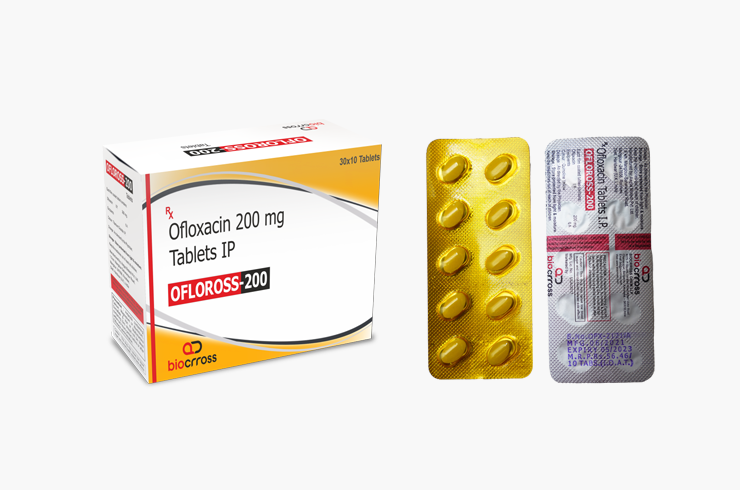
— Product
OFLOROSS-200 TAB (YELLOW)
OFLOXACIN 200MG
OFLOROSS-200 TAB (YELLOW) is a tablet of ofloxacin 200 mg, a fluoroquinolone antibiotic. It is used for urinary tract infections, respiratory tract infections, skin and soft-tissue infections, and certain sexually transmitted infections caused by susceptible organisms.
01
Benefits
- Broad-spectrum activity against Gram-negative and many Gram-positive organisms, and against atypical pathogens.
- Excellent oral bioavailability, achieving blood levels close to intravenous dosing.
- Achieves high concentrations in urine, prostate and lung tissue, useful in urinary, prostatic and respiratory infection.
- Twice-daily dosing is convenient.
- Effective in complicated urinary tract infection and prostatitis, where few oral agents penetrate adequately.
02
Side effects
Not everyone gets these. Most are mild and settle as the course finishes.
Common
- Nausea or vomiting
- Diarrhoea
- Headache or dizziness
- Insomnia or restlessness
Less common
- Increased sensitivity to sunlight
- Abdominal discomfort
- Skin rash
- Altered taste
Stop and get medical help if any of these occur
- Pain, swelling or rupture of a tendon, particularly the Achilles
- Numbness, tingling, burning or weakness in the hands or feet
- Seizures, confusion, hallucinations, severe anxiety or depression
- Severe, watery or bloody diarrhoea during or in the weeks after the course
- Palpitations or fainting
- Swelling of the face, lips or tongue, or difficulty breathing
03
Precautions
- Fluoroquinolones can cause tendon damage and rupture, peripheral neuropathy and central nervous system effects, which may be permanent. Stop at the first sign of tendon pain or new numbness and tingling.
- Tendon risk is much higher in the elderly, in patients on corticosteroids, and in transplant recipients.
- Reserve fluoroquinolones for infections where other antibiotics are unsuitable — they should not be first-line for uncomplicated infections.
- Contraindicated in children and adolescents, in pregnancy and in breastfeeding.
- Contraindicated in known quinolone hypersensitivity, in a history of tendon disorder with a quinolone, and in myasthenia gravis, which fluoroquinolones can worsen.
- Prolongs the QT interval — avoid in known QT prolongation, uncorrected electrolyte disturbance, and alongside other QT-prolonging drugs.
- Separate from antacids, calcium, iron and zinc by at least two hours.
- Avoid excessive sun exposure, maintain good fluid intake, and use with caution alongside warfarin and NSAIDs.