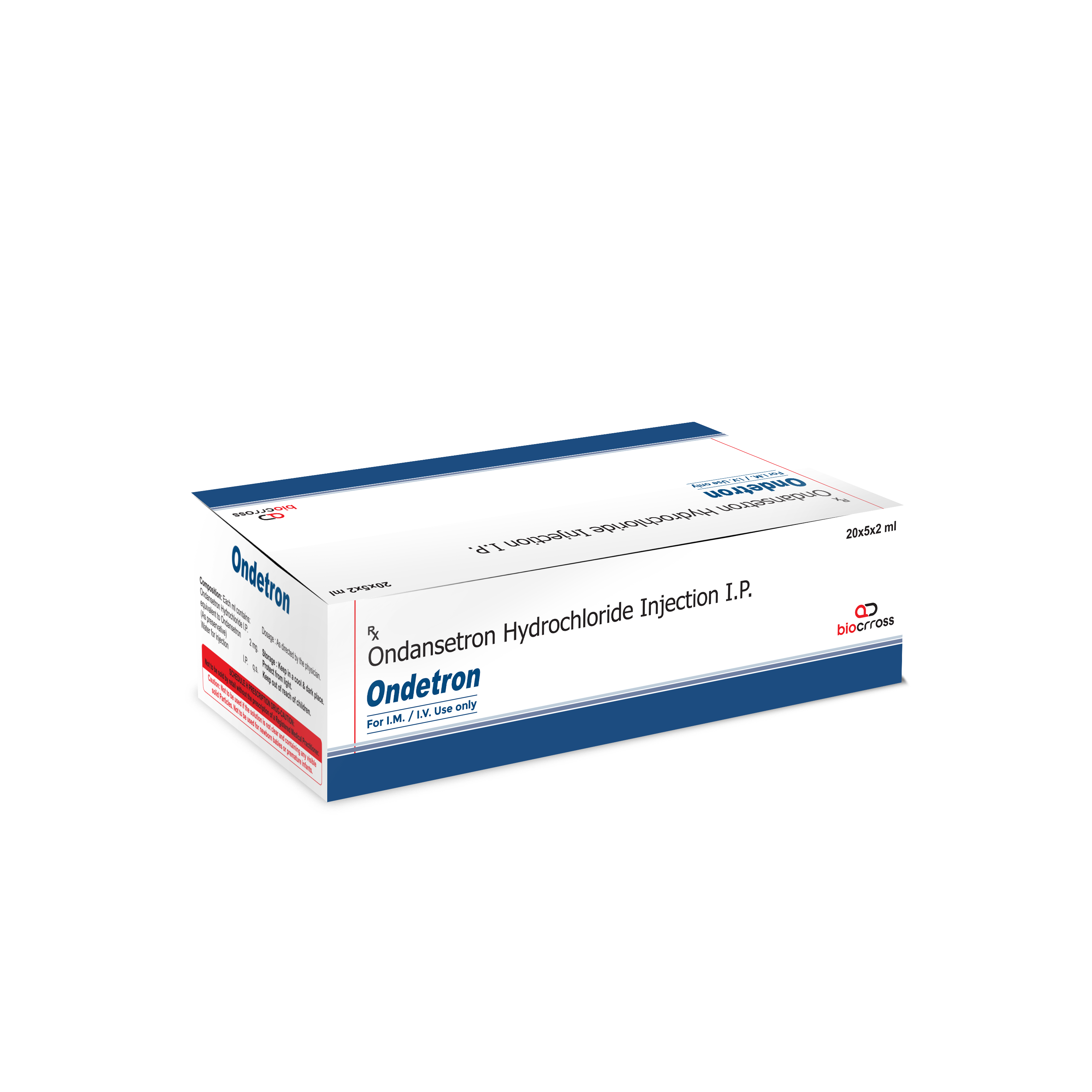
— Product
ONDETRON 2ML AMP
ONDANSETRON 2MG INJ
ONDETRON 2ML AMP is an injection of ondansetron 2 mg per ml in a 2 ml ampoule, a 5-HT3 receptor antagonist antiemetic given intravenously or intramuscularly. It is used for the prevention and treatment of nausea and vomiting from chemotherapy, radiotherapy and surgery.
01
Benefits
- The injectable route works where the patient is actively vomiting and cannot retain an oral dose.
- Rapid onset, useful in the immediate perioperative period and during chemotherapy administration.
- Highly effective in chemotherapy- and radiotherapy-induced nausea.
- Causes no sedation and no extrapyramidal effects, unlike older injectable antiemetics.
- Widely used for the prevention of post-operative nausea and vomiting.
02
Side effects
Not everyone gets these. Most are mild and settle as the course finishes.
Common
- Headache
- Flushing or a sensation of warmth
- Constipation
- Pain or stinging at the injection site
Less common
- Dizziness
- Raised liver enzymes on testing
- Hiccups
- Transient visual disturbance after rapid intravenous injection
Stop and get medical help if any of these occur
- Palpitations, fainting or an irregular heartbeat
- Chest pain
- Agitation, confusion, fever, sweating, tremor or muscle rigidity — this may be serotonin syndrome
- Blurred or transient loss of vision
- Swelling of the face, lips or tongue, or difficulty breathing
03
Precautions
- For administration by a qualified healthcare professional. Intravenous doses must be given slowly or by dilution — rapid injection risks arrhythmia and transient visual disturbance.
- Ondansetron prolongs the QT interval. Contraindicated in congenital long QT syndrome; use with caution in electrolyte disturbance, bradycardia and alongside other QT-prolonging drugs.
- Correct low potassium or magnesium before administration, particularly in a vomiting patient.
- Contraindicated with apomorphine.
- Risk of serotonin syndrome with SSRIs, SNRIs, tramadol and other serotonergic drugs.
- Antiemetics mask the symptoms of a serious underlying cause — persistent vomiting needs a diagnosis.
- Dose reduction is required in significant hepatic impairment.
- Use in pregnancy only where clearly indicated.