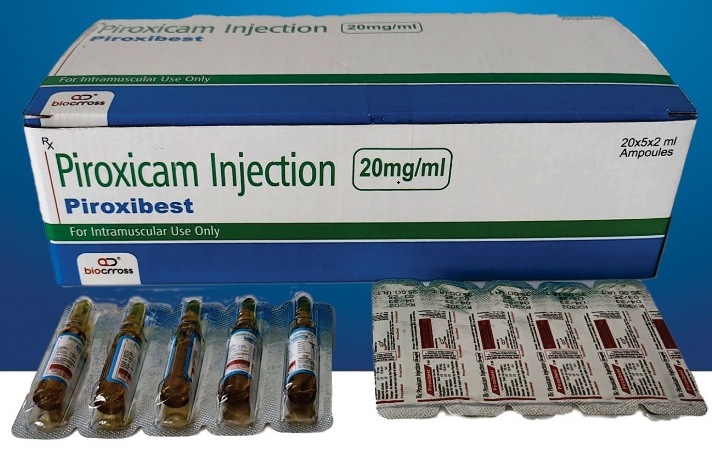
— Product
PIROXIBEST INJ 2ML
PIROXICAM 20MG/ML AMPS INJ
PIROXIBEST INJ 2ML is an injection of piroxicam 20 mg per ml in a 2 ml ampoule, a long-acting NSAID given by deep intramuscular injection. It is used for acute musculoskeletal pain, acute gout and painful arthritic flares where rapid, sustained anti-inflammatory action is needed.
01
Benefits
- Piroxicam has a long half-life, so a single injection provides anti-inflammatory cover for a full day or more.
- Rapid onset by the injectable route where oral analgesia is impractical or too slow.
- Effective in acute gout, where potent anti-inflammatory action shortens the attack.
- Useful in acute musculoskeletal injury and arthritic flares.
- Single daily dosing simplifies short-course treatment.
02
Side effects
Not everyone gets these. Most are mild and settle as the course finishes.
Common
- Pain or induration at the injection site
- Nausea or epigastric discomfort
- Dizziness or headache
- Indigestion
Less common
- Gastric erosion or bleeding
- Fluid retention or a rise in blood pressure
- Raised liver enzymes
- Skin rash or itching
Stop and get medical help if any of these occur
- Black, tarry stools or vomiting of blood
- Widespread rash with blistering or peeling skin — piroxicam carries a particular risk of severe skin reactions
- Chest pain, breathlessness, or weakness down one side
- A marked fall in urine output
- Swelling of the face, lips or tongue, or difficulty breathing
03
Precautions
- Piroxicam carries a higher risk of serious gastrointestinal bleeding and of severe skin reactions, including Stevens-Johnson syndrome, than most other NSAIDs. It is restricted to second-line use and should not be a first choice.
- Its long half-life means adverse effects, once they occur, persist for days after stopping.
- Contraindicated in active or previous peptic ulceration or gastrointestinal bleeding, and in inflammatory bowel disease.
- Contraindicated in severe hepatic or renal impairment, in heart failure, and in NSAID hypersensitivity including aspirin-sensitive asthma.
- Contraindicated in the third trimester of pregnancy and in breastfeeding.
- Limit to the shortest course possible — typically a day or two of injection before switching to oral therapy or another agent.
- Consider gastroprotection in any patient at gastrointestinal risk, and do not give alongside another NSAID or with aspirin.
- For administration by a qualified healthcare professional, by deep intramuscular injection. Stop immediately at any sign of rash.