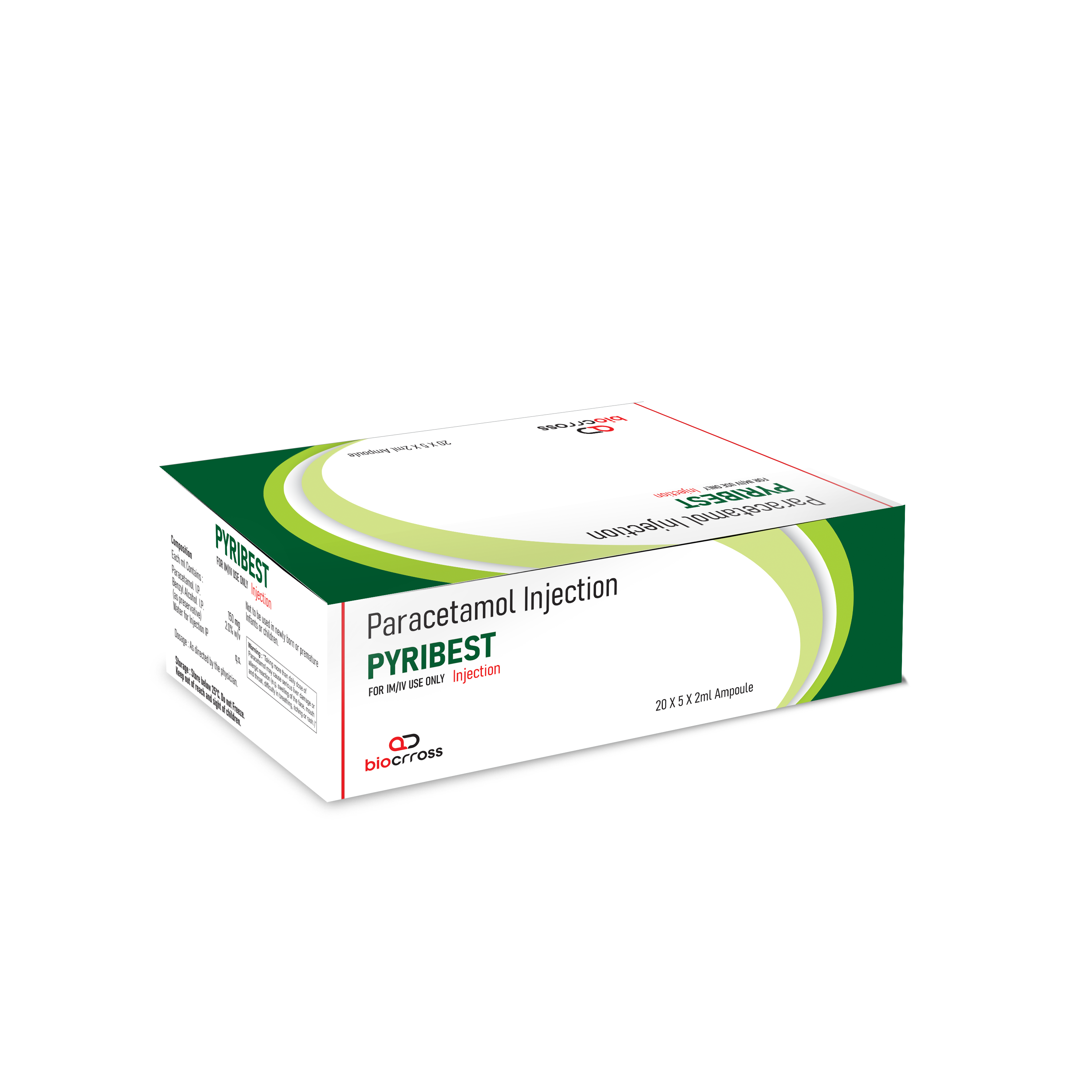
— Product
PYRIBEST 2ML INJ
PARA 2ML 150MG INJ
PYRIBEST 2ML INJ is an injection of paracetamol 150 mg per ml in a 2 ml ampoule, given by intramuscular injection. It is used for fever and mild to moderate pain where the oral route is unavailable — in vomiting, in the perioperative period, and in patients unable to swallow.
01
Benefits
- The injectable route works where the patient is vomiting, unconscious or nil by mouth.
- Paracetamol does not irritate the stomach or affect platelet function, unlike injectable NSAIDs, so it is safer in peptic ulcer disease and alongside anticoagulants.
- Suitable where NSAIDs are contraindicated — asthma, kidney disease, heart failure.
- Useful as part of a multimodal post-operative analgesic regimen, reducing opioid requirement.
- Rapid antipyretic effect in high fever.
02
Side effects
Not everyone gets these. Most are mild and settle as the course finishes.
Common
- Pain or stinging at the injection site
- Nausea
- Generally very well tolerated at recommended doses
- Mild local redness
Less common
- Raised liver enzymes on testing
- Skin rash or itching
- Fall in blood pressure
- Malaise
Stop and get medical help if any of these occur
- Any suspected overdose — even when the patient feels completely well
- Yellowing of the skin or eyes, dark urine, or persistent right-upper-abdominal pain
- Swelling of the face, lips or tongue, or difficulty breathing
- Widespread rash with blistering or peeling skin
- Severe pain or swelling at the injection site
03
Precautions
- For administration by a qualified healthcare professional.
- Never exceed the maximum daily dose from all routes combined. Injectable paracetamol given alongside oral or rectal paracetamol is a recognised cause of iatrogenic overdose — count every source.
- Reduce the dose in low body weight, chronic malnutrition, chronic alcohol use and hepatic impairment, where the toxic threshold is lower.
- Paracetamol overdose causes liver failure and the early hours are typically symptom-free — treatment must begin before the patient appears unwell.
- Contraindicated in severe hepatic impairment and in known hypersensitivity to paracetamol.
- Switch to the oral route as soon as the patient can take it.
- Use with caution alongside warfarin with regular dosing.
- Use in pregnancy and breastfeeding at the recommended dose is generally considered acceptable.