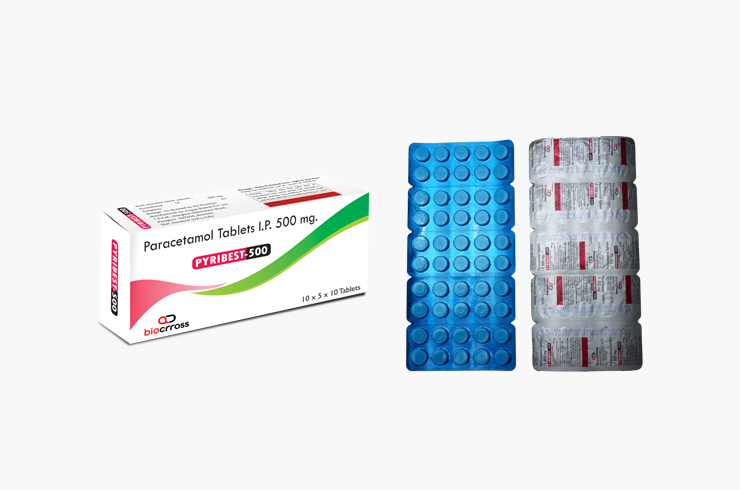
— Product
PYRIBEST 500MG TAB
PARACETAMOL 500MG
PYRIBEST 500MG TAB is a tablet of paracetamol 500 mg, an analgesic and antipyretic. It is used for mild to moderate pain — headache, toothache, period pain, musculoskeletal aches — and for the reduction of fever. It is the standard adult strength and one of the most widely used medicines in the world.
01
Benefits
- Effective for everyday mild to moderate pain and for bringing down fever.
- Does not irritate the stomach lining or affect platelet function, unlike NSAIDs, so it is safe in peptic ulcer disease and alongside anticoagulants.
- Suitable in patients where NSAIDs are contraindicated — asthma, kidney disease, heart failure, pregnancy.
- Considered the analgesic of choice in pregnancy and while breastfeeding when used at the recommended dose.
- Long-established safety profile at correct doses, with decades of clinical use across all age groups.
- Can be combined with an NSAID or opioid for additive relief without overlapping toxicity.
02
Side effects
Not everyone gets these. Most are mild and settle as the course finishes.
Common
- Generally very well tolerated at recommended doses
- Occasional nausea
- Mild stomach discomfort
- Skin rash in a small number of patients
Less common
- Raised liver enzymes on testing
- Itching or urticaria
- Low platelet or white cell counts with prolonged high-dose use
- Hypersensitivity reaction
Stop and get medical help if any of these occur
- Any suspected overdose — even when the patient feels completely well, which is characteristic and dangerous
- Yellowing of the skin or eyes, dark urine, or persistent right-upper-abdominal pain
- Swelling of the face, lips or tongue, or difficulty breathing
- Widespread rash with blistering or peeling skin
- Unusual bruising or bleeding
03
Precautions
- Never exceed the maximum daily dose. Paracetamol overdose causes liver failure, and the early hours are typically symptom-free — treatment must begin before the patient feels unwell.
- Check every other medicine the patient is taking. Paracetamol is present in a great many cold, flu and combination analgesic products, and stacking them is the commonest route to accidental overdose.
- Reduce the dose in low body weight, chronic malnutrition, chronic alcohol use and hepatic impairment, where the toxic threshold is lower.
- Avoid regular alcohol during treatment.
- In suspected overdose, seek emergency care immediately regardless of how well the patient appears — the antidote works only if given early.
- Contraindicated in severe hepatic impairment and in known hypersensitivity to paracetamol.
- Use with caution alongside warfarin, where regular use can affect anticoagulant control.
- If pain persists beyond a few days or fever beyond three, the cause needs assessment rather than continued self-treatment.