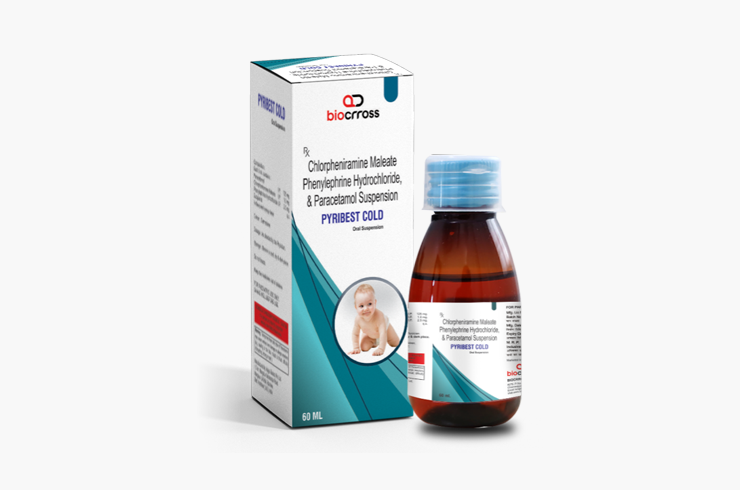
— Product
PYRIBEST COLD SYP 60ML MC
PARACETAMOL 125MG + PHENYLEPHRINE 2.5MG + CPM 1MG
PYRIBEST COLD SYP 60ML MC is a paediatric syrup combining paracetamol 125 mg, phenylephrine 2.5 mg and chlorpheniramine maleate 1 mg. It is used for the symptomatic relief of fever, aches, runny nose and nasal blockage in children with a cold, with the dose set by age and weight.
01
Benefits
- Paracetamol reduces the fever and relieves the discomfort of a cold.
- Chlorpheniramine dries the runny nose and post-nasal drip.
- Phenylephrine relieves nasal blockage, making feeding and sleeping easier.
- The liquid form allows dosing by age and weight.
- One preparation covers the main symptom complex of a childhood cold.
02
Side effects
Not everyone gets these. Most are mild and settle as the course finishes.
Common
- Drowsiness
- Dry mouth
- Nausea or reduced appetite
- Restlessness
Less common
- Paradoxical excitability, which is more common in children than adults
- Fast heart rate
- Constipation
- Difficulty passing urine
Stop and get medical help if any of these occur
- Severe drowsiness or difficulty rousing the child
- Fast, pounding or irregular heartbeat
- Unusual agitation, hallucinations or seizures
- Fast breathing, chest indrawing, or difficulty feeding
- Any suspected overdose, even if the child seems well
03
Precautions
- Cough and cold combinations are not recommended in young children and carry a real risk of harm from dosing errors. Use only on paediatric advice.
- Do not give alongside any other paracetamol-containing preparation — this is the commonest route to paediatric paracetamol overdose.
- Dose strictly by age and weight using the measure supplied.
- Not for children below the age stated on the label.
- Contraindicated in cardiac disease, hyperthyroidism, narrow-angle glaucoma and urinary retention.
- Do not give with, or within fourteen days of, a monoamine oxidase inhibitor.
- For short-term use only; reassess if symptoms persist beyond five days or fever beyond three.
- Seek review urgently for fast breathing, chest indrawing, difficulty feeding or persistent fever.