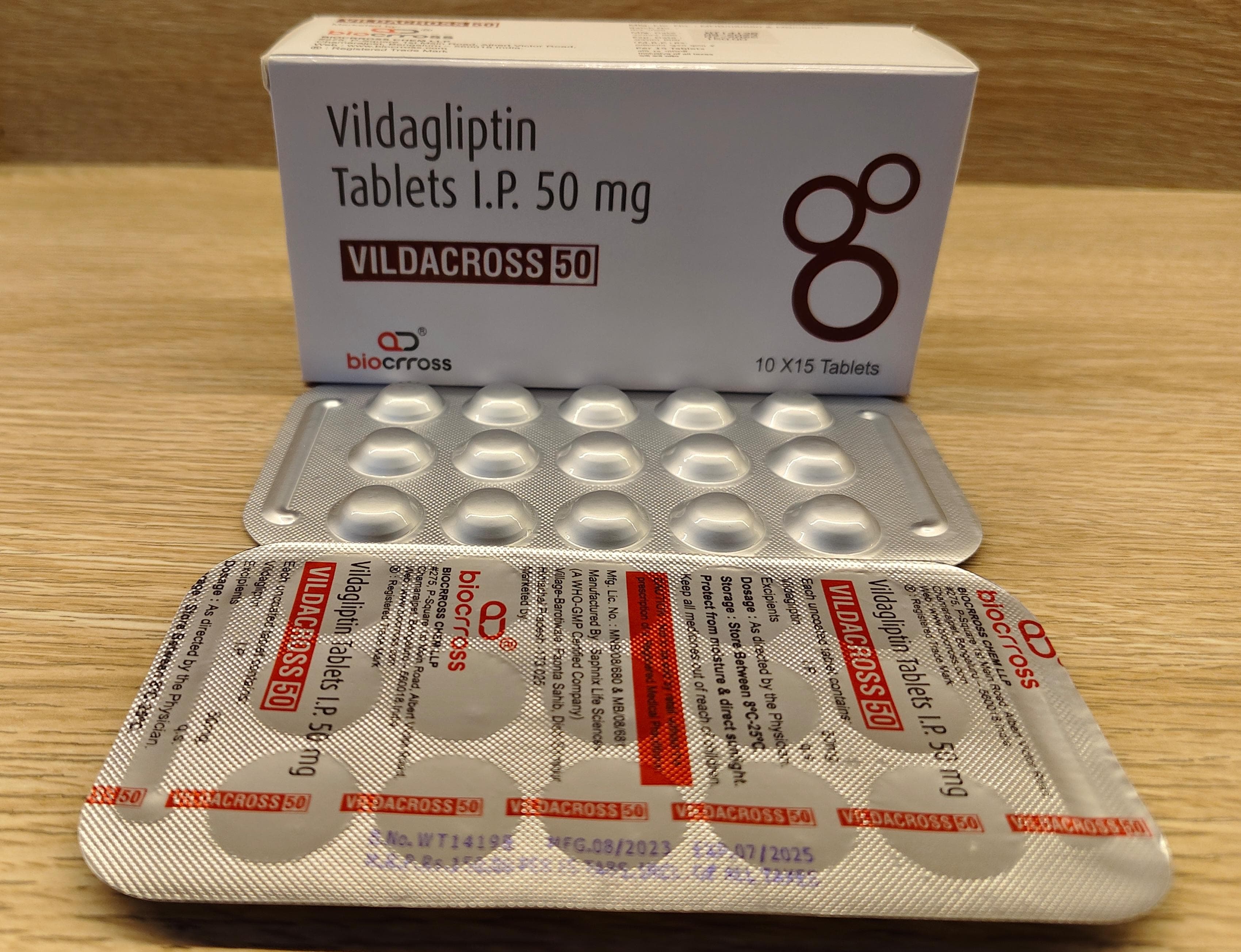
— Product
VILDACROSS 50 TAB
VILDAGLIPTIN 50MG
VILDACROSS 50 TAB is a tablet of vildagliptin 50 mg, a DPP-4 inhibitor. It is used in type 2 diabetes mellitus to improve glycaemic control, working by enhancing the body's own incretin hormones to increase insulin release and reduce glucagon after meals.
01
Benefits
- Enhances endogenous incretin activity, increasing insulin release only when blood glucose is raised.
- Because the action is glucose-dependent, it carries a very low risk of hypoglycaemia when used alone.
- Weight-neutral, unlike sulphonylureas, pioglitazone and insulin.
- Well tolerated, with a side-effect profile close to placebo in most patients.
- A useful option in the elderly and where hypoglycaemia would be particularly hazardous.
02
Side effects
Not everyone gets these. Most are mild and settle as the course finishes.
Common
- Headache
- Dizziness
- Nausea
- Nasopharyngitis or upper respiratory symptoms
Less common
- Constipation or diarrhoea
- Peripheral oedema
- Raised liver enzymes on testing
- Joint pain
Stop and get medical help if any of these occur
- Severe persistent abdominal pain radiating to the back, with vomiting — this may be acute pancreatitis
- Yellowing of the skin or eyes, dark urine, or persistent nausea and loss of appetite
- Severe or disabling joint pain
- Blistering skin lesions, which may indicate bullous pemphigoid
- Swelling of the face, lips or tongue, or difficulty breathing
03
Precautions
- Check liver function before starting and at intervals during the first year. Vildagliptin has been associated with hepatic dysfunction, and this monitoring is specifically recommended for this agent.
- Stop immediately and investigate if jaundice or other signs of liver injury appear.
- DPP-4 inhibitors have been associated with acute pancreatitis. Stop at once if severe persistent abdominal pain occurs, and avoid in a history of pancreatitis.
- Contraindicated in type 1 diabetes, in diabetic ketoacidosis, and in significant hepatic impairment.
- Dose reduction is required in moderate to severe renal impairment.
- Hypoglycaemia risk rises when combined with a sulphonylurea or insulin — those doses often need reducing.
- Bullous pemphigoid has been reported with DPP-4 inhibitors; stop and refer if blistering skin lesions develop.
- Contraindicated in pregnancy and breastfeeding.